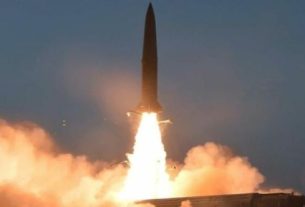
TEHRAN: Iran’s reported ballistic missile strike on a US aircraft carrier and a guided missile destroyer is more than a headline about ships and salvos; it is a signal that the rules of naval power in the Gulf are being rewritten. Even if the missiles did not hit, the episode raises the price tag on America’s forward presence and nudges commanders toward more cautious, costlier patterns of deployment.
US Central Command (CENTCOM) says the Islamic Revolutionary Guard Corps (IRGC) fired multiple ballistic missiles at a carrier and a destroyer patrolling regional waters, and that both vessels evaded the attacks without casualties. Iranian officials, by contrast, claim the warships were damaged and forced to withdraw, portraying the strike as proof that US naval dominance can be challenged close to Iran’s shores.
At stake is not only whether metal was dented, but how the threat changes American calculations. An aircraft carrier is Washington’s most visible tool of power projection, moving air and sea firepower near a crisis to deter adversaries and strike quickly. But proximity also breeds vulnerability; the nearer a carrier sails to a conflict zone, the more escorts, radar coverage, fighter patrols, and early warning assets it requires.
From this angle, a missile threat—even an intercepted one—imposes what analysts call the “cost of presence.” US commanders must now assume their ships are within range, which can mean keeping carriers farther offshore, altering transit routes, increasing reconnaissance flights, and dedicating more munitions to defense. Each adjustment burns fuel, flight hours, and missile inventories, and can constrain the carrier’s ability to launch offensive operations, reported by Mehr News Agency.
Iran does not need to sink a carrier to achieve part of its deterrence goal. In modern warfare, a weapon can be effective simply by forcing the other side to commit large resources to counter it. Ballistic missiles, in this view, are not only damage dealers; they are behavior shapers, designed to narrow an adversary’s freedom of movement and increase operational risk.
That said, the military balance has not flipped. The United States retains overwhelming advantages in air, sea, intelligence, and layered defenses around its carriers. There is a difference between the ability to target a ship and the ability to destroy it, and Washington’s response striking Iranian oil tankers and warning of further economic costs aims to restore deterrence and signal that attacks will be met in kind.
The wider arena is the region’s waters, where shipping lanes, energy transit, and trade routes hang in the balance. Iran’s geography favors short range strikes and persistent harassment; the US counters with superior sensors, aircraft, and missile defenses. The contest, then, is as much about budgets and risk tolerance as it is about missiles and hulls.
If Tehran can keep raising the cost and complexity of US carrier operations without suffering prohibitive retaliation, it will have shifted the deterrence equation. If Washington can sustain carrier deployments while absorbing those costs, Iran’s effort to limit American freedom of action will face a steeper climb. The real significance of this episode is not whether a warship was hit, but that a symbol of US power must now operate under a persistent, serious missile variable one that will shape where carriers sail, how they move, and for how long.