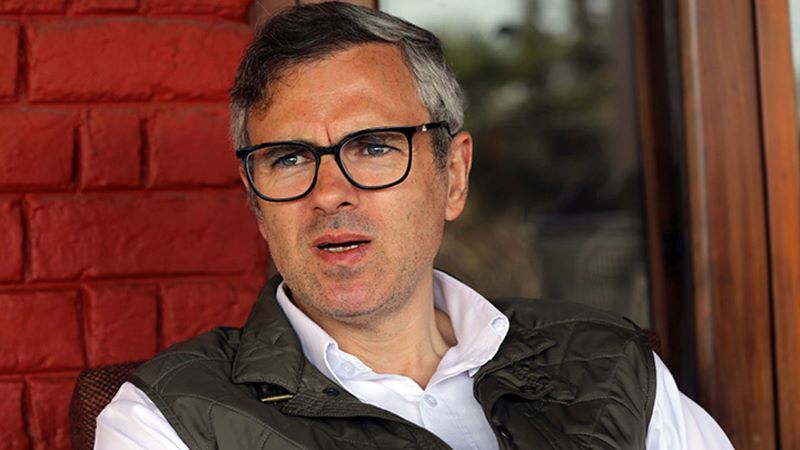
SRINAGAR, July 20 — In a renewed and forceful demand, Jammu and Kashmir Chief Minister Omar Abdullah on Sunday called for the immediate restoration of full statehood to the region, categorically rejecting any proposal for a “hybrid system” of governance that would leave law and order under the control of the central government.
Speaking nearly ten months after the National Conference’s sweeping return to power, Abdullah insisted that statehood is not a concession but a constitutional right—one that was promised by the Centre both in Parliament and before the Supreme Court.
“It’s not something extraordinary or unprecedented,” Abdullah told PTI in an interview. “Statehood was taken away and promised to be returned. We are merely asking for what’s due.”
He criticized ongoing speculation about a governance model that would return elected representation to Jammu and Kashmir, but retain control of security and law enforcement in New Delhi’s hands. “There’s no such model anywhere else in the country. Why is J&K being treated differently?” he asked. “If this dual structure is so ideal, why not implement it in Uttar Pradesh or Maharashtra?”
The Chief Minister emphasized that the National Conference is exploring all possible legal and political avenues to push the demand forward. “There have been internal discussions, and we’re also consulting with legal experts,” he said, leaving open the possibility of petitioning the Supreme Court.
Abdullah has maintained what he described as a “cordial” relationship with Prime Minister Narendra Modi, though he declined to reveal details of their private conversations. “These discussions have occurred at multiple levels,” he said. “Rest assured, the issue of statehood has been raised, and we continue to raise it.”
He rejected the idea that cooperation with the Centre amounts to political compromise. “Cordial relations don’t mean silence,” he said. “When things go wrong, we speak out.”
Drawing a sharp contrast with the previous Peoples Democratic Party (PDP) alliance with the BJP, Abdullah pointed out the political contradictions of that period. “Mehbooba Mufti’s alliance with the BJP was built on opportunism, not principle,” he remarked.
Abdullah was especially critical of security developments in the region since 2015, noting that militancy has spread dramatically under the Union Territory’s direct central administration. “In my time, we had militancy confined to two or three districts. Today, it’s widespread across the Valley and parts of Jammu,” he said. “The data speaks for itself. Elected governments have historically done a better job at maintaining peace and order.”
He also condemned what he called the inefficiencies of the current administrative setup, pointing to the absence of a unified chain of command and delays in finalizing governance rules. “This model doesn’t work for a region of our size and complexity,” he said. “It’s time for the Centre to stop delaying and start delivering on its promises.”
With political temperatures rising and local frustration growing, Abdullah’s message was clear: Jammu and Kashmir wants its voice back—and it won’t settle for less.