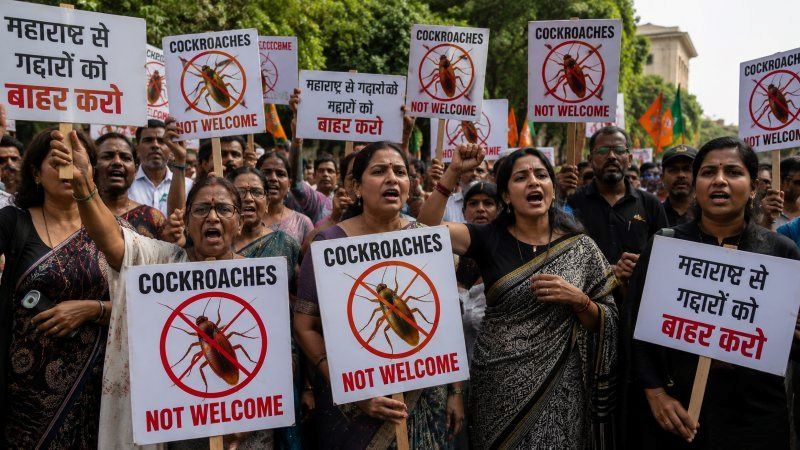
A youth-led protest movement in India, born from online satire but fueled by deep frustration, is gaining momentum as demonstrators camp in the capital and demand the resignation of the country’s education minister, according to Al Jazeera News.
The so-called “Cockroach” movement, started by young activists and widely shared on social media, began as a symbolic response to controversial remarks comparing young people to cockroaches. What started as a joke has since grown into a nationwide protest, drawing thousands of students and young supporters into the streets.
In New Delhi, protesters have set up an indefinite sit-in despite police restrictions, sleeping on roads and pavements under intense summer heat. Authorities have maintained a heavy presence and have attempted to disperse the crowds, including limiting access to food and water at times. Still, more demonstrators continue to join.
The protests reflect growing anger among India’s youth over repeated exam paper leaks and irregularities in competitive tests. These incidents have shaken trust in the country’s education system, especially among students already facing intense academic pressure and limited job opportunities.
Nearly half of India’s population is under the age of 25, making the issue particularly sensitive. Recent exam cancellations and retests affecting millions have intensified frustration, while reports of student suicides in the aftermath have added urgency to calls for accountability.
The government has taken steps to curb leaks, including temporarily restricting certain messaging platforms, but critics argue these measures do not address deeper systemic problems.
Despite the challenges, the movement continues to expand beyond the capital to other major cities. Protesters say they will not leave until their demands are met, framing their campaign as a broader fight for fairness, transparency, and dignity in the education system.
For many young Indians, this marks a rare moment of collective political expression, as a generation raised in a single political era begins to push back against institutions it believes have failed them.