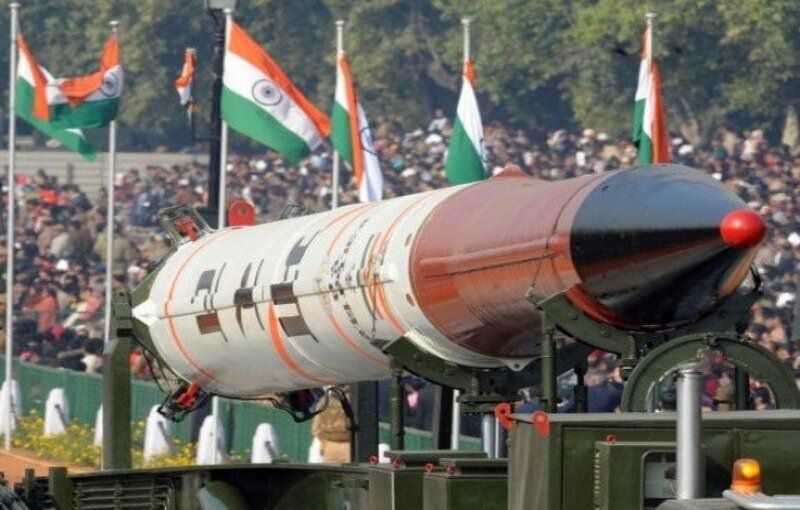
India has announced a historic expansion of public spending, unveiling a record-breaking defence budget of $85 billion and a massive $133 billion allocation for infrastructure in its latest national budget, according to Reuters. Finance Minister Nirmala Sitharaman presented the ambitious financial plan to parliament on Sunday, describing it as a decisive step toward strengthening national security, boosting domestic manufacturing, and sustaining rapid economic growth.
Defence spending will rise by 15 percent compared to last year, while infrastructure investment will increase by about nine percent, funding projects ranging from high-speed rail networks to submarines and advanced fighter aircraft. Sitharaman said public infrastructure spending has reached an “all-time high,” up sharply from just $21 billion in 2014–15, underscoring the government’s long-term development strategy.
The increase in defence funding follows a four-day military confrontation with Pakistan last May, during which at least 70 people were killed and both sides deployed drones, missiles, and heavy artillery. Defence Minister Rajnath Singh called the budget “unprecedented,” stressing that it would modernize India’s armed forces with new aircraft, naval vessels, submarines, and cutting-edge technologies. India is currently negotiating major defence procurement deals with both domestic manufacturers and international partners, including France, the United States, and Germany.
Beyond defence, the budget prioritizes high-growth sectors such as artificial intelligence, data centres, rare earth mining, and semiconductor manufacturing. Sitharaman pledged strong government backing for these industries, positioning them as pillars of India’s economic future. The government also announced tax incentives for foreign companies that establish cloud and data centre services in India, as well as financial support for domestic chip production.
Prime Minister Narendra Modi hailed the budget as a bold roadmap toward transforming India into the world’s third-largest economy. He emphasized that the country’s ambition extends beyond rapid growth, aiming instead for technological leadership, job creation, and greater economic self-reliance.
The plan includes the construction of seven high-speed rail corridors linking major urban hubs such as Mumbai, Bengaluru, Hyderabad, Pune, and Chennai, alongside the development of “rare earth corridors” in mineral-rich regions. Additional investments will target textiles, pharmaceuticals, electronics, and chemicals to strengthen exports and expand industrial capacity.
Against a backdrop of global trade tensions and ongoing negotiations with the United States and the European Union, Sitharaman said India would continue to pursue “confident steps” toward sustainable development, balancing ambition with inclusion in an increasingly uncertain global economy.