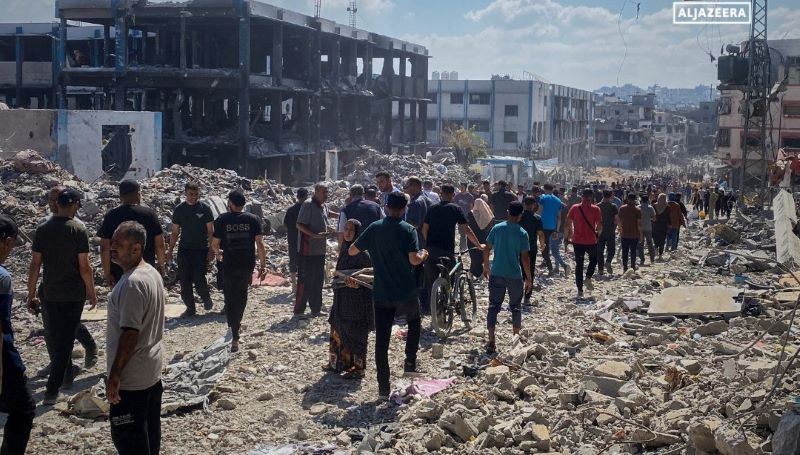
Brussels — Rebuilding Gaza after years of war will require more than $71 billion over the next decade, according to a new joint assessment by the United Nations and the European Union, according to AFP. The report paints a stark picture of widespread destruction, deep human suffering, and a fragile ceasefire that remains under strain.
The Gaza Rapid Damage and Needs Assessment (RDNA), prepared with support from the World Bank, describes a territory devastated by more than two years of conflict. Entire neighborhoods lie in ruins, with schools, hospitals, and basic infrastructure heavily damaged or destroyed. The report calls the situation an “unprecedented” humanitarian crisis marked by immense loss of life and collapsing living conditions.
According to the findings, about $71.4 billion will be needed for long-term recovery and reconstruction. Of this, $26.3 billion is urgently required within the next 18 months to restore essential services, rebuild critical infrastructure, and help restart Gaza’s shattered economy.
The scale of destruction is staggering. Physical damage alone is estimated at $35.2 billion, while economic and social losses add another $22.7 billion. Nearly 372,000 homes have been destroyed or damaged, leaving large parts of the population without shelter. More than half of Gaza’s hospitals are no longer functioning, and almost all schools have been affected.
Despite a ceasefire agreed in October, reports of continued violations by Israeli defense forces have raised serious concerns about its durability. Ongoing military actions and strikes have added to the uncertainty on the ground, making recovery efforts even more difficult and putting civilians at continued risk.
The human toll remains severe. More than 72,000 people have been killed, most of them civilians, according to Palestinian health authorities. Around 1.9 million people; nearly the entire population, have been displaced, many forced to flee multiple times. Over 60 percent have lost their homes.
Gaza’s economy has nearly collapsed, shrinking by 84 percent. The report warns that the combined effects of war, displacement, and economic breakdown have pushed human development in Gaza back by an estimated 77 years.
While the ceasefire offers a narrow window for rebuilding, the path ahead remains uncertain. Continued violence threatens to undo fragile progress, leaving millions caught between hope for recovery and fear of renewed conflict.