Brussels — Thousands of travelers have been denied entry to Europe since the European Union began introducing its new automated border control system, which officially became fully operational on Friday, reported by Hurriyet Daily News.
The system, known as the Entry/Exit System (EES), marks a major shift in how non EU visitors are checked at Europe’s external borders. Replacing the traditional passport stamp, the new digital system records travelers’ details electronically in an effort to improve both security and efficiency.
According to the European Commission, more than 52 million border crossings have been recorded since the system first began rolling out in October last year. During that period, over 27,000 people were refused entry into the participating countries.
Among them, nearly 700 individuals were identified as potential security threats to the European Union, Brussels said.
“With the EES, we are taking control of who enters and leaves the EU, when and where,” said Magnus Brunner, the EU’s commissioner for internal affairs.
The system is now active at all external border crossing points across the 29 participating countries. It covers 25 EU member states, excluding Ireland and Cyprus, as well as Norway, Iceland, Switzerland, and Liechtenstein, all of which are part of the Schengen free movement zone.
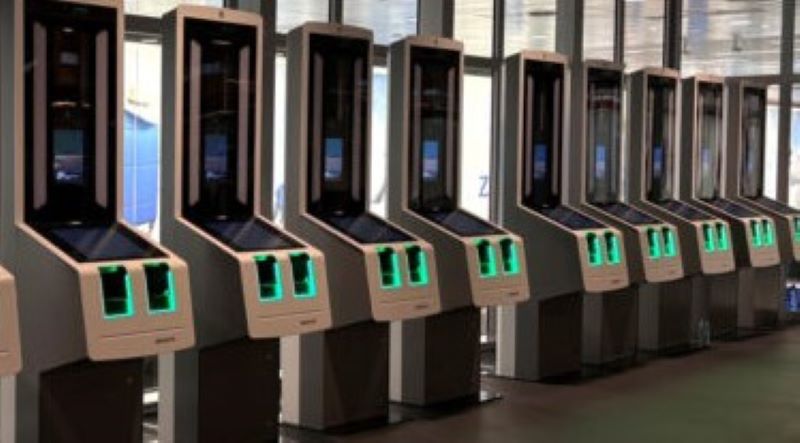
Under the new process, non-EU travelers arriving for short stays must enter their passport details, provide fingerprints, and have their photograph taken at automated kiosks. This information is then stored in a digital file, allowing border authorities to track when and where a person enters or leaves the region.
EU Executive Vice-President for Security and Democracy Henna Virkkunen said the system would help authorities “identify risks in real time” and better tackle people who overstay their visas.
However, the launch has also raised concerns among airlines, rail operators, and passengers, many of whom feared longer waiting times at airports and train stations.
The Commission sought to reassure travelers, saying the average registration time is around 70 seconds, which it described as a short and manageable process.
The new system reflects Europe’s broader effort to strengthen border security while modernizing travel procedures for millions of visitors.