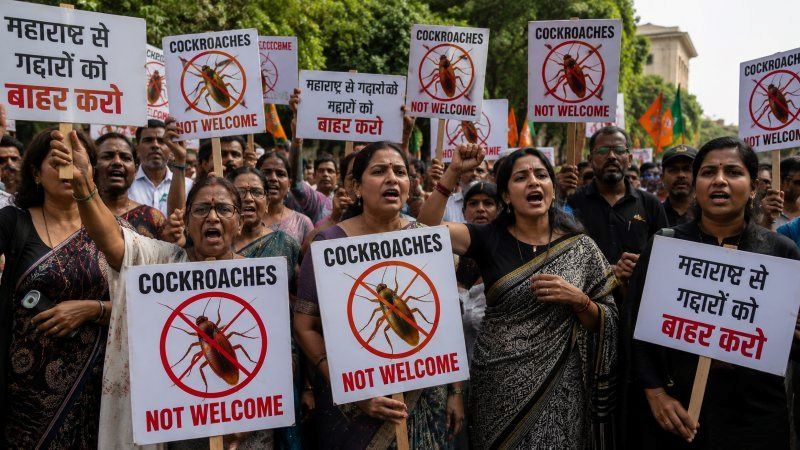
New Delhi: Delhi has tightened its security as police detained dozens of people, including Abhijeet Dipke, a leader of the Cockroach Janta Party (CJP), ahead of a major protest demanding electoral reforms. The party said the detentions were part of a crackdown on its planned demonstration, according to BBC News.
Large parts of the Indian capital have taken on the appearance of a fortress, with tens of thousands of security personnel deployed to prevent unrest. Barricades and a heavy police presence have added to the tense atmosphere as authorities prepare for possible clashes.
The protesters are demanding changes to the electoral system and the resignation of Gyanesh Kumar, the chief of India’s Election Commission. They have accused the electoral authorities of manipulating voter lists, a charge the Election Commission denies.
Police refused permission for the planned protest, citing concerns that it could turn violent, as happened during earlier demonstrations. The decision has added to tensions between the authorities and activists, who say electoral transparency and accountability are essential to democracy.
The Cockroach Janta Party began as a satirical online campaign but gradually developed into a youth-led movement. Its rise reflects growing political engagement among young people, particularly around questions of electoral fairness and public accountability.
The group’s previous major protest in July ended in violent clashes with police and led to the resignation of India’s education minister, according to the account provided by the party and the protest organisers.
With the latest demonstration facing restrictions and its leaders reportedly among those detained, the confrontation has once again brought the movement into the spotlight.
As Delhi remains under tight security, the dispute highlights the difficult balance between maintaining public order and allowing citizens to express political dissent. The coming hours could prove crucial in determining whether the standoff remains contained or develops into another major confrontation.