In just twenty-four hours, an astonishing 60,000 migrants stormed into the Spanish enclave of Ceuta, a number far higher than officials first reported. Tens of thousands have already turned back toward Morocco, but the situation remains tense, with residents describing a feeling of total defenselessness. Italy has temporarily suspended the Schengen Agreement with Spain in response to the crisis.
Spain’s Interior Ministry initially reported about 49,000 arrivals, but later raised that number to 60,000. City officials said migrants crossed the EU’s external border at a peak rate of 200 people per minute, according to the Financial Times. Many arrived by sea, others by land, all coming from Morocco.
At least 57 people have died, authorities say, and officials fear many more bodies may still be lost at sea. Spain’s Guardia Civil has sent specialist diving teams to Ceuta to help search for victims.
Ceuta is home to roughly 87,000 people, meaning its population grew by nearly 70 percent in a matter of hours. “This number shows it is impossible to absorb such pressure,” said Ceuta’s president, Juan Jesús Vivas. By Friday afternoon, about 37,500 migrants had already returned to Morocco, and more people are now leaving the city each day than arriving.
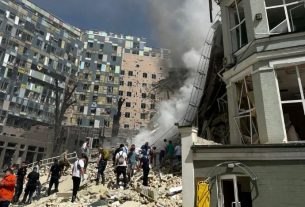
Local newspapers described the city as being in complete chaos. With shelters full, thousands of migrants wandered the streets without direction, and many businesses closed their doors. Frightened residents barricaded themselves inside their homes. Locals said police were stretched thin, since most officers remained at the border, leaving shop owners to organize their own protection.
Clashes broke out overnight near the border, with police using tear gas as vehicles burned. Not since 2021, when 8,000 people crossed in 36 hours, has Ceuta faced anything on this scale. Spain has now sent troops to the enclave, and Prime Minister Pedro Sánchez plans to visit the border himself.
A similar, smaller crossing took place in the nearby enclave of Melilla, where about 400 migrants entered the city.
Italian Prime Minister Giorgia Meloni said her country would “not stand idly by,” and called for Spain to be temporarily removed from the Schengen zone, a demand Finland echoed. France also tightened its border controls. Austrian officials criticized Spain’s migration policy, with one calling the crisis a “complete bankruptcy” of European migration policy.