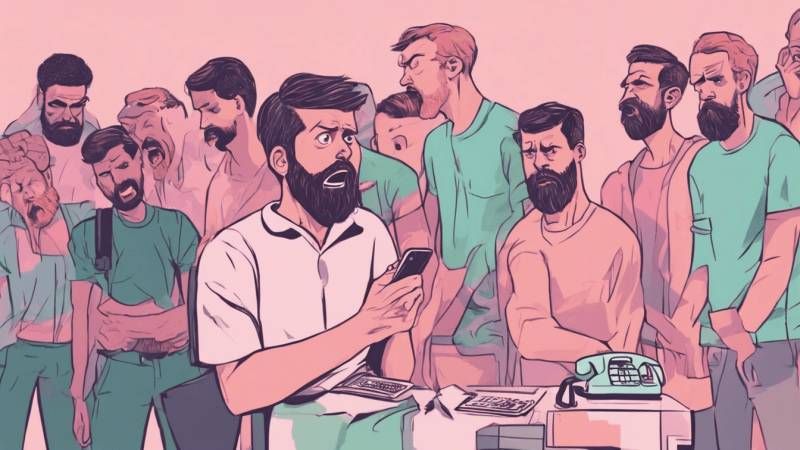
Blasphemy “honey traps” targeting young men highlight Pakistan’s digital exploitation crisis, institutional failure, and misuse of religious laws
Dr. Noreen Saher
In Pakistan’s rapidly transforming digital environment, the increasing misuse of blasphemy accusations through orchestrated “honey traps” represents a troubling convergence of cultural inertia, religious instrumentalisation, and institutional incapacity. This emerging phenomenon—where young men are allegedly lured into online exchanges by fabricated or deceptive profiles and later accused of blasphemy—highlights a profound cultural lag. While digital technologies have evolved rapidly, enabling new forms of communication and identity construction, the sociocultural norms and legal frameworks regulating these interactions remain deeply rooted in patriarchal, pre-digital value systems.
A recent case in Islamabad illustrates the gravity and structure of this phenomenon. A young man was reportedly approached through social media by a woman with whom he developed a digital friendship. After weeks of seemingly benign conversation, he was accused of making blasphemous remarks, allegedly extracted from manipulated screenshots and selectively quoted messages. His family maintains that this entrapment was orchestrated by an organised network that demanded money in exchange for silence. Similar cases, now numbering in the hundreds according to informal legal aid networks and human rights defenders, suggest that these incidents are not isolated aberrations but indicative of a systemic pattern of digital exploitation.
The concept of the “honey trap,” traditionally associated with espionage or coercive seduction, is now being recontextualised in Pakistan’s socio-religious domain to entrap and incriminate individuals, primarily young men, under one of the most feared legal charges in the country. These traps exploit the naïveté of youth, the opacity of digital interaction, and the overwhelming social and legal stigma attached to blasphemy. What was once a gendered tactic of surveillance and control has now been repurposed as a tool of ideological domination and extortion.
The absence of clear protocols for verifying digital evidence, combined with the highly charged public atmosphere surrounding blasphemy, leaves accused individuals virtually defenceless
This dynamic also exposes deeper institutional weaknesses. Although the Islamabad High Court recently directed the formation of a commission of inquiry—a move that was ultimately blocked—state institutions remain ill-equipped to confront the complex and multifaceted nature of this threat. Cybercrime units lack both the forensic capacity and procedural independence to investigate politically and religiously charged allegations impartially. The absence of clear protocols for verifying digital evidence, combined with the highly charged public atmosphere surrounding blasphemy, leaves accused individuals virtually defenceless. In such cases, due process is often pre-empted by public outrage, and judicial integrity is undermined by fear and political pressure.
From the social scientific lens, the persistence of this issue underscores the gap between technological advancement and social adaptation—what William Fielding Ogburn termed “cultural lag.” Youth, who increasingly live hybridised lives across physical and digital spaces, are caught between modern modes of self-expression and a moral economy that reads such expression as deviant or subversive. The growing trend of honey trap blasphemy accusations reflects a new form of digital moral regulation, where traditional values are enforced through modern technological means.
At its core, this is not merely a legal or digital crisis, but a moral panic amplified by a volatile nexus of religion, gender politics, and cyber-insecurity. The blasphemy honey trap, as a sociotechnical tool, functions to discipline male youth who deviate from rigid expectations, while also generating financial, social, or ideological capital for those behind the scheme. Its normalisation signals a dangerous recalibration of power—one that bypasses formal mechanisms of justice in favour of informal, performative accusations that carry lethal consequences.
Addressing this phenomenon requires a multidimensional strategy: robust legal reforms to prevent misuse of religious laws; transparent cybercrime protocols; investment in digital forensics and literacy; and a re-engagement with religious discourse through inclusive frameworks. Without these interventions, Pakistani society risks deepening its internal contradictions, where modern tools are weaponised to enforce pre-modern control, and where young lives are sacrificed at the altar of unchecked religious nationalism and institutional decay.
What is ultimately at stake is the societal contract itself: whether Pakistan’s institutions will uphold the rule of law and civic trust, or continue to abdicate responsibility in the face of ideological manipulation and systemic fear.
Courtesy The Friday Times Pakistan (06.08.2025)