

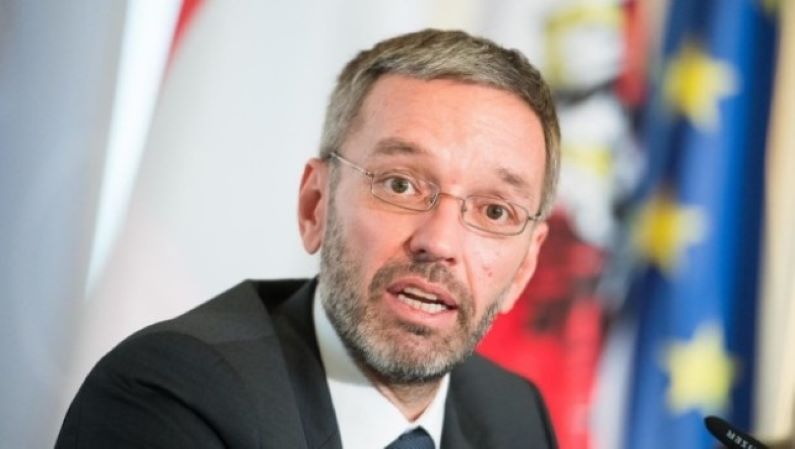
Austria finds itself at a political crossroads, its centrist reputation shaken by the ascent of Herbert Kickl and the far-right Freedom Party (FPÖ). Once a divisive figure branded a “political pariah,” Kickl is now poised to lead the nation, with the Austrian People’s Party (ÖVP) edging toward an alliance that would have been unthinkable just months ago. This dramatic shift raises questions about how Austria’s political landscape unraveled so quickly, trading stability for expediency.
On Epiphany morning, as ORF III broadcast a solemn Catholic Mass, the ÖVP convened a crisis meeting at the Chancellor’s office. The Gospel reading, “In the beginning was the Word,” contrasted sharply with the cynical maneuverings of Austria’s political elite. Once immutable principles have been discarded, replaced by words tailored for convenience and quickly abandoned when inconvenient.
The Waning of Political Principles
In Austria, alliances form and fracture with little regard for consistency. Just a year ago, Kickl was dismissed by ÖVP leaders as a “security risk.” Now, faced with declining influence and political deadlock, the ÖVP appears to be recalibrating—not out of conviction but desperation.
By noon, Federal President Alexander Van der Bellen summoned Kickl to the Hofburg. Though the President’s role is largely ceremonial, his mandate to Kickl to form a government would formalize this historic—and contentious—shift. Procedural propriety aside, this meeting underlined a stark reality: the far-right leader, once shunned, now holds the key to Austria’s political future.
A Theatre of Absurdity
The surreal drama of Austria’s political shift reached its peak in the run-up to the ÖVP’s pivot. The Social Democratic Party (SPÖ) clung to the hope of an alliance with the ÖVP, even as it became clear the talks were going nowhere. Meetings devolved into hollow rituals, marked by long pauses and even longer silences. By Saturday evening, the farce reached its conclusion: during a recess, cleaning staff cleared the negotiation room of glasses, coffee cups, and snacks—a stark symbol of futility.
The following day, ÖVP Chancellor Karl Nehammer formally ended talks with the SPÖ, effectively resigning himself and triggering a leadership reshuffle. His replacement, Christian Stocker, represents the ÖVP’s economically conservative faction. Tasked with navigating this precarious new alliance, Stocker must now reconcile the party’s pivot with its previously uncompromising stance against the FPÖ.
Ironies and Contortions
The optics of this alliance are strikingly ironic. Many ÖVP leaders, who just months ago denounced Kickl as “unfit to govern,” now negotiate with him as an equal. Christian Stocker himself declared in December that “nobody in this Republic needs Herbert Kickl.” Today, Stocker must align his party with the very man he so emphatically opposed.
Kickl, known for his flair for symbolism, might find inspiration in the owl, which can rotate its head 270 degrees without moving its body. This metaphor aptly captures the political acrobatics required to form a coalition between the ÖVP and FPÖ.
A Fragile Future
Austria’s new political chapter opens with trepidation. The nation’s fragile democracy, already stressed by years of rapid political shifts, now faces an unprecedented test. Can a government forged from such expediency foster stability and trust? Or will this alliance exacerbate divisions and deepen public cynicism?
As FPÖ-ÖVP negotiations begin, Austrians are left to ponder the consequences of their leaders’ decisions. The Hofburg remains the center of attention, where the fate of a divided nation hangs in the balance.





