

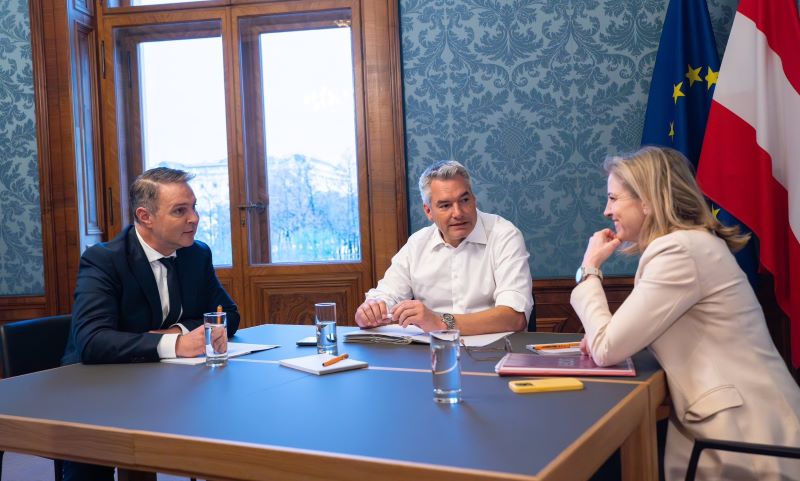
VIENNA: Austria’s coalition government stands at a precarious crossroads, with a crucial week of negotiations set to determine its fate. The core issue: an unresolved budget impasse that has strained relations among the SPÖ, ÖVP, and Neos. Negotiators warn that the odds of success are sharply diminishing.
“It has been better for the coalition,” lamented ÖVP chief negotiator Harald Mahrer, reflecting the tense atmosphere. While subcommittees have resolved over half of the coalition’s agenda items, the fundamental question of fiscal consolidation remains fiercely contested.
Austria’s deficit crisis looms large, with the National Bank recently revising its projections downward. The country is expected to run deficits of 3.7% in 2024 and 4.1% in 2025, well above the EU’s 3.0% limit. Additionally, a debt-to-GDP ratio nearing 80% compounds the threat of an EU deficit procedure, a measure that would subject Austria to stringent oversight while extending the timeline for fiscal adjustments.
The coalition remains deeply divided on solutions. The ÖVP insists on austerity via spending cuts, while the SPÖ advocates for revenue-focused measures such as taxes on high incomes and certain goods. Meanwhile, Neos negotiators criticize the lack of reformist vision from their partners, calling for transformative policies.
Economist Hanno Lorenz of Agenda Austria warns that embracing an EU procedure could harm Austria’s reputation but offer crucial flexibility. Avoiding it, however, demands drastic immediate cuts—estimated at €11 billion.
As tensions rise, Austria awaits decisive leadership negotiations. By week’s end, the coalition’s future—and its promises—may either solidify or collapse.





