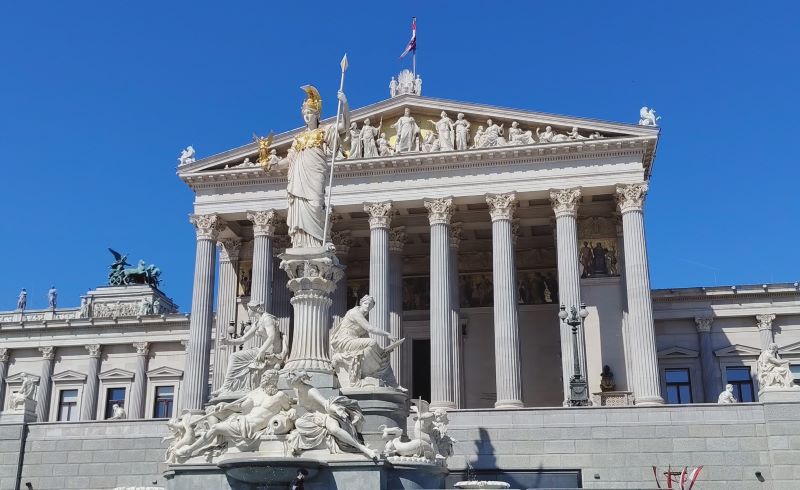
Austria’s government is set to enter a crucial parliamentary session with a strong focus on migration policy and the rising cost of living. According to a report by ORF, coalition leaders have outlined their main priorities ahead of the National Council’s plenary week, highlighting both cooperation within the government and sharp disagreements with the opposition.
At a joint press conference in Vienna, representatives of the Austrian People’s Party (ÖVP), the Social Democratic Party (SPÖ), and NEOS emphasized plans to implement the European Union’s asylum pact and reduce value-added tax (VAT) on essential food items.
ÖVP parliamentary leader Ernst Gödl, preparing for his first session in his new role, expressed cautious optimism about cross-party collaboration. He stressed that internal security will remain a central concern. According to Gödl, the Common European Asylum System (GEAS) is expected to help manage migration more effectively through faster procedures at the EU’s external borders. He also indicated that family reunification rules will stay limited, with quotas kept very low.
SPÖ leader Philip Kucher highlighted the coalition’s efforts to address the public’s most pressing concerns. He noted that intensive discussions within the government had taken place in recent days. For the Social Democrats, the fight against inflation remains a key priority, especially as many households continue to struggle with rising prices.
NEOS parliamentary leader Yannick Shetty described cooperation within the coalition as stable and based on trust. He reiterated his party’s long-standing support for a unified European asylum policy, calling for stronger border management, consistent return policies, and better protection for children from the moment they arrive.
However, the planned measures have drawn strong criticism from the opposition Freedom Party (FPÖ). Security spokesperson Gernot Darmann has condemned the national implementation of the EU asylum pact, calling it a serious threat to Austria’s safety.
As lawmakers gather in Vienna, the upcoming debates are expected to reveal deep political divisions over how Austria should balance migration control, economic pressure, and social responsibility.