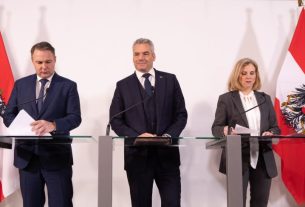
A new political dispute has erupted in Austria after fresh financial figures from the Austrian Health Insurance Fund (ÖGK) triggered strong criticism from pensioners’ representatives, according to Heute.
The ÖGK recently reported a deficit of €156 million for 2025, far lower than the previously expected €454 million. ÖGK chairman Peter McDonald described the smaller shortfall as a positive development and a sign that the system is stabilizing. However, the Pensioners’ Association of Austria (PVÖ) strongly disagrees with this interpretation.
PVÖ leaders argue that the improved financial situation is not the result of reforms or savings, but mainly due to higher contributions from pensioners themselves. PVÖ president Birgit Gerstorfer accused the health fund of presenting a misleading picture and hiding the real reasons behind the reduced deficit.
At the center of the controversy is an increase in health insurance contributions for pensioners. According to the PVÖ, these contributions were raised only for older people, from 5.1 percent to 6.0 percent, an increase of 17.6 percent. The association estimates that this measure brings in around €500 million more each year for the health system.
For pensioners’ representatives, the conclusion is clear: it is the older generation, not structural reforms, that has helped prevent a deeper financial crisis. Gerstorfer stated that pensioners have effectively carried the burden of stabilizing the health fund through their contributions.
The association also criticizes what it sees as a double burden on older citizens. While paying higher contributions, pensioners are also facing reduced benefits or higher out of pocket costs. Complaints include co-payments for medical transport, rising costs for dental treatments, and cuts affecting sick pay. The message, critics say, is simple: pay more, receive less.
The tone of the debate has grown increasingly sharp. Gerstorfer described the ÖGK’s position as disrespectful and called it “a slap in the face” for pensioners. Many older people, especially those with lower pensions, already feel financial pressure in daily life, from paying for medicines to covering travel for medical appointments.
As healthcare and pensions remain deeply sensitive issues in Austria, the dispute is unlikely to fade soon. For many citizens, the debate is not just political, it directly affects how much money they have left at the end of each month.