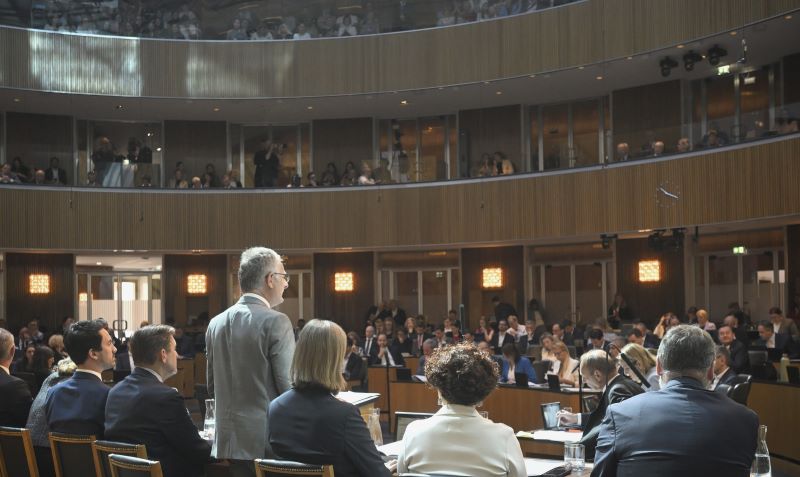
Austria’s National Parliament has approved a new package of legal reforms aimed at making the deportation of foreign offenders easier and reducing pressure on the country’s overcrowded prison system. The legislation is scheduled to take effect on 1 November and has sparked a political debate over public safety, rehabilitation and prison conditions.
Justice Minister Anna Sporrer of the Social Democratic Party (SPÖ) described the reforms as an important step towards easing the burden on Austria’s prisons. The government argues that allowing eligible foreign prisoners to return to their home countries directly from custody will also reduce the workload of the police. Only the far right Freedom Party (FPÖ) voted against the package.
Under the new rules, certain foreign nationals may be conditionally released to their home countries after serving half of their prison sentence, even without their consent. However, the measure excludes people convicted of serious violent or sexual offences and terrorist crimes. Those affected must also be subject to an entry and residence ban and must not qualify as European Economic Area citizens or certain protected third country nationals.
The reforms also seek to expand the practice of transferring EU citizens to their home countries to serve their sentences. In addition, postponements for prison sentences of up to two years will become possible, compared with the previous limit of one year. Adults may also request a longer postponement if they need to complete ongoing vocational training.
Interior Minister Gerhard Karner of the conservative Austrian People’s Party (ÖVP) said around 3,000 convicted offenders had left Austria during the first nine months of the year, averaging almost ten a day. He expects the new legislation to accelerate deportations and reduce the need for immigration detention.
The FPÖ strongly criticised the changes. Its representatives argued that earlier releases could weaken the deterrent effect of criminal punishment, while calling for more prison staff and safer working conditions.
The liberal NEOS party accused the FPÖ of criticising without offering practical solutions. Meanwhile, the Greens raised concerns about overcrowding, insufficient prison capacity and the working conditions of prison officers. Green MP Agnes Sirkka Prammer warned that both inmates and staff were facing unacceptable conditions.
The decision marks a significant shift in Austria’s approach to deporting foreign offenders. Yet, while the government hopes to ease pressure on prisons and police, questions about prison capacity, staffing and humane conditions remain unresolved.