Across Pakistan, journalism is becoming a profession many reporters can no longer afford to practise. Behind bylines and television studios, media workers face stagnant salaries, delayed wages and weak legal protection. The result is a quiet crisis: experienced journalists are leaving the field, while those who remain are increasingly exposed to pressure from employers, officials and powerful interests, reported by The Friday Times Pakistan.
For many reporters, one income is no longer enough. Some have opened small shops or launched online businesses to support their families. Others continue working despite salaries below the legal minimum wage or payments that arrive late, if at all. In smaller cities, where media jobs are scarce, the problem is sharper still. Women journalists often face lower pay and are sometimes treated as if their work is a hobby rather than a career.
The crisis is not confined to one newsroom or city. Journalists’ unions say many newspapers fail to pay regular monthly salaries, though independent verification is difficult because salary data are rarely public. Media organisations argue that falling circulation, rising production costs and the movement of advertising to digital platforms have left them financially strained. Yet these pressures do not erase their duty to pay workers for work already done.
Pakistan’s legal framework was meant to protect newspaper employees. A wage board is supposed to set salaries and benefits, while a tribunal handles disputes. In practice, the system has been slow and uneven. One wage award was announced years behind schedule, leaving earnings far behind inflation. The rules also largely exclude television, radio and digital journalists, even as those platforms have become central to the country’s news landscape.
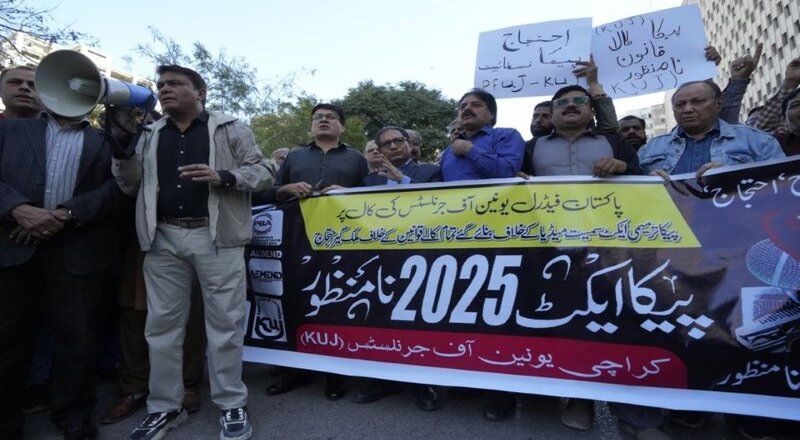
Economic insecurity is not only part of the pressure on Pakistan’s press. Journalists also work under laws that critics say can silence reporting rather than protect the public. The Prevention of Electronic Crimes Act, known as PECA, has been invoked in cases involving online speech, social media posts and digital journalism. Press freedom groups argue that vague provisions and broad powers can expose reporters to investigations, arrests or criminal cases for work that should be protected as public-interest journalism.
The Pakistan Electronic Media Regulatory Authority, or PEMRA, adds another layer of control over broadcasters. Regulators can issue warnings, suspend programmes or penalise channels. Media workers say such authority can encourage self-censorship, particularly on politically sensitive subjects. Complaints councils exist to hear grievances, but journalists question whether they can resolve salary disputes or protect editorial independence.
Lawmakers have recently acknowledged the wage crisis. A parliamentary committee expressed concern over unpaid and delayed salaries and asked government departments to disclose advertising payments and outstanding liabilities to media organisations. It also sought details of television channels’ debts and the steps being taken to recover them. These are welcome steps, but their value depends on transparency and enforcement. Information requests filed by journalists and rights groups have often gone unanswered, forcing appeals to information commissions.
International media freedom organisations have urged governments to make public advertising allocation transparent and independent, support outlets that pay formal salaries, and strengthen unions and wage boards. Such reforms would not solve every problem in a changing media market. But they could prevent workers from bearing the full cost of that change.
The stakes extend beyond individual paycheques. A reporter forced to juggle two jobs has less time for investigation. A journalist facing criminal complaints may avoid sensitive stories. A newsroom that cannot retain staff loses its ability to serve communities and hold power to account. If Pakistan wants a free press, it must protect not only journalists’ right to publish, but also their right to earn a living with dignity.