

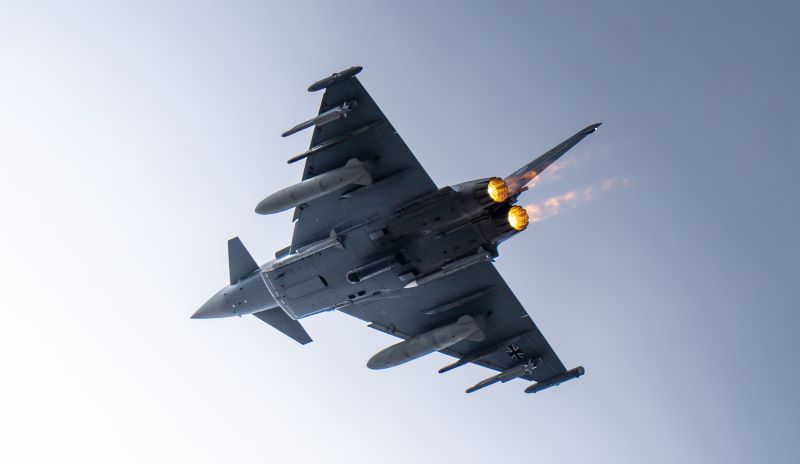
Austria is reaffirming what it calls the heart of its identity; neutrality. The government has refused permission for U.S. military aircraft linked to the growing Iran conflict to fly through its airspace.
The Defense Ministry confirmed on Thursday that such flights are banned under Austria’s long-standing Neutrality Act, which strictly forbids participation in foreign wars. Officials didn’t reveal how many requests have come from Washington, saying only that there have been “a few.” Each case, they explained, is carefully reviewed with the Foreign Ministry.
The key question in every review is simple: Where is the plane going, and why?
Flights that head directly to a war zone, like Iran or Ukraine, are immediately rejected. Training runs or supply missions that simply pass through Austrian airspace can still be approved, but only under strict legal guidelines.
According to the Troop Residence Act, every single request for a military passage must include a detailed route and description of purpose. Austria processes thousands of such requests every year, most harmless and routine, connected to exercises or peacekeeping operations. But this time, officials made clear: no flight that even touches a war effort will pass.
“This has always been our policy,” said a spokesperson from the People’s Party (ÖVP). “Any overflight that violates neutrality will be rejected. That is non-negotiable.”
Defense Minister Klaudia Tanner stressed that neutrality means more than political words, it requires action. She pointed to investments in air surveillance and plans for new fighter jets. “If we take neutrality seriously,” she said, “we must also protect it.”
Austria is not the only European nation holding back. Spain has also closed its airspace to U.S. military flights, while Italy recently denied American aircraft landing rights at a base in Sicily.
Meanwhile, U.S. President Donald Trump has voiced irritation at what he sees as Europe’s lack of support, reportedly renewing threats to pull the U.S. out of NATO, a move requiring approval from Congress that remains unlikely but politically charged.
For many Austrians, the government’s decision is a quiet reassurance that even in a world of louder conflicts, this small alpine nation still guards its independence and its skies with care.





