KABUL: Thousands of Afghan civilians who suffered during the country’s 20-year war have been left without justice, compensation or even official recognition of their pain, the United Nations said Tuesday.
The conflict began after the United States launched a military intervention in Afghanistan following the September 11, 2001 attacks. It continued until the withdrawal of international forces and the Taliban’s return to power in 2021, reported by Agency France Press.
According to the UN mission in Afghanistan, more than 40,000 civilians were killed and 77,000 wounded during the war. The victims included people caught in attacks by Taliban fighters and Daesh militants, as well as civilians harmed during operations by Afghan government forces and the US-led international coalition.
At Kabul’s Tapa-e-Shuhada, or Martyrs’ Hill, rows of graves reflect only a small part of the tragedy. Many of those buried there belonged to the Hazara community, which was repeatedly targeted by militant groups.
Among the graves is that of Suhaila, a 21-year-old student killed in an attack at Kabul University. Another belongs to 17-year-old Muhammad Hadi, who died in a 2020 Daesh attack on a school.
Mohammad, 25, survived the same attack but was unable to continue his studies because of severe psychological problems. Once determined to become a computer engineer, he now works occasionally as a tailor.
“I have lost my focus,” he told AFP. “The world has forgotten us.”
UNAMA said 95 percent of nearly 200 victims it interviewed had suffered psychological harm, including memory loss, depression and suicidal thoughts.
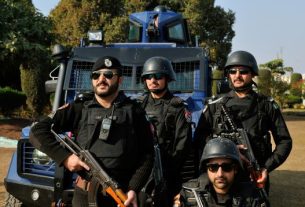
In Logar province, farmer Khan Yousufi recalled how an Afghan government police tank killed his eight-year-old son and seriously wounded his wife. Despite repeatedly seeking justice, he said, “no one listened.”
The UN said most victims who tried to obtain justice failed. A national plan for peace, reconciliation and justice launched in 2006 was never fully implemented, while the 2020 US-Taliban peace agreement included no specific protection for victims’ rights.
Although some foreign investigations and court cases have taken place, efforts to hold those responsible accountable remain limited.
For survivors such as Yousufi and Mohammad, justice means more than punishment. They also seek medical care, education and support to rebuild lives damaged by years of violence.