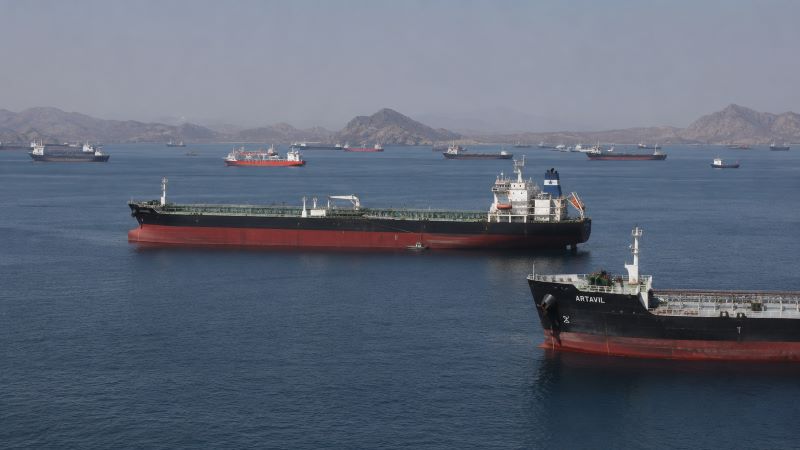
A Singapore-flagged container ship has sunk in the Strait of Hormuz after being struck by an unknown projectile, in the latest attack on commercial shipping in one of the world’s most important waterways, reported by BBC News.
Singapore’s Maritime and Port Authority said all 21 crew members of the GFS Pride were evacuated after Tuesday’s attack, which caused a fire and serious damage. No injuries were reported.
The ship later sank about four nautical miles northwest of Ras al-Sheikh Masud, on Oman’s Musandam Peninsula, according to Pakistan’s Hydrographer.
A second Singapore-flagged vessel, the GFS Giselle, was hit by a projectile on Wednesday. It suffered hull damage but reached a safe anchorage with all 22 crew members aboard.
Iran’s Revolutionary Guards gave a different account, saying the ship had struck naval mines while using what it called an “unauthorised” route. The Guards released photographs showing black smoke rising from a vessel still afloat but low at the stern. Other images appeared to show containers floating in the sea.
The United Kingdom Maritime Trade Operations agency said two unnamed container ships reported being struck by unknown projectiles while passing through the strait between 16:40 and 17:00 GMT on Tuesday. Both suffered minor damage and continued their journeys.
The attacks come as merchant ships face growing danger in the Strait of Hormuz, which links the Gulf with the Gulf of Oman and the Arabian Sea. Violence against shipping has increased since the war between the United States, Israel and Iran began in February.
According to the UN’s International Maritime Organization, at least 24 seafarers have been killed in 106 confirmed incidents. The GFS Pride is the second container ship known to have sunk during that period, after the Malta-flagged Safeen Prestige was attacked near Oman in March.
The strait normally carries about a fifth of the world’s oil and gas shipments. It was effectively closed early in the war after Iranian missile and drone attacks and a US naval blockade of Iranian ports. A June agreement briefly reopened the route, but collapsed within weeks as attacks resumed.
Despite the renewed danger, crude exports through the waterway rose last month to about 80 percent of pre-war levels, according to shipping analysts at Kpler.