EU Turns to Gulf as Hormuz Crisis Redraws Energy Map
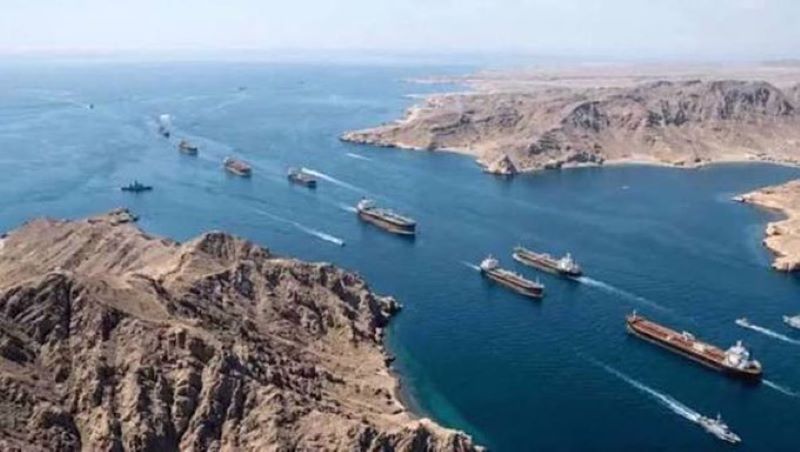
NEW YORK: As attacks in the Strait of Hormuz and on Saudi Arabia unsettle global trade, Europe is racing to redraw its energy and transport map, leaning harder on the Gulf and seeking new alliances to keep its economies running.
Dubravka Suica, the European Union’s commissioner for the Mediterranean, said the turmoil has turned alternative routes and fresh partnerships from long-term plans into urgent necessities. In an interview with Arab News on the sidelines of the UN General Assembly, she described a push to link the Gulf, the Mediterranean and Europe into a single, more resilient energy market, reported by Arab News.
“This is very important knowing what’s going on in the world now,” Suica said, pointing to the war in Ukraine and the crisis in Hormuz. “We have to build new alliances. We have to find new alternative routes.”
She condemned Houthi attacks on Saudi Arabia in strong terms, warning that the fragility of the region is rippling far beyond the Middle East. Freedom of navigation through Hormuz, she said, must be secured “without any fees, without any obstacles,” echoing calls from EU foreign policy chief Kaja Kallas.
At the center of Europe’s new strategy is Saudi Arabia. Strategic partnership talks are already underway with the UAE, Qatar and Bahrain, and are “just about to start” with Riyadh, Suica said. “Without the Gulf, the region can’t be complete,” she added. “We badly need all the Gulf countries to be on board in order to achieve peace in the Middle East.”
The issue will dominate a summit in Riyadh on Oct. 24, when leaders of the 27 EU member states meet their six Gulf counterparts. Agenda items include digital links, transport, trade and energy. Suica highlighted the India-Middle East-Europe Economic Corridor as a key project, with the EU studying which sections can be rolled out quickly.
The broader framework is the Pact for the Mediterranean, launched in 2025 to create a more connected and secure space stretching from southern Europe to North Africa and the Gulf. Its action plan covers education, youth skills, clean energy, digital infrastructure and security. A Mediterranean University and a new Youth and Skills Initiative aim to train young people for green and AI-driven jobs.
Energy cooperation now goes well beyond oil. The EU is backing solar, wind and hydrogen projects in the Gulf and North Africa, but Suica warned that without new undersea interconnectors, that power cannot reach European grids. Planned links include Egypt–Greece, Morocco–Spain and Tunisia–Italy, with Gulf connections in the works.
On Palestine, Suica rejected the idea that the two-state solution is dead, calling it an EU obligation to keep it alive. She described the Israeli-Palestinian conflict as the Mediterranean’s main “troublemaker,” even as the bloc raised close to $1 billion for early recovery in Gaza.
She said Israel has approved two small projects so far, including one on water, but warned that elections could delay further steps. The amount raised is “symbolic” compared with estimated reconstruction needs of more than €71 billion, she conceded, adding that Gulf investment will be crucial once regional tensions ease.
In Lebanon, half of a €1 billion EU package has been disbursed, with the rest tied to banking reforms. In Syria, the EU is preparing a €620 million program focused on rebuilding state institutions, even as it keeps channels open to Israel and presses against settlement expansion in the West Bank.