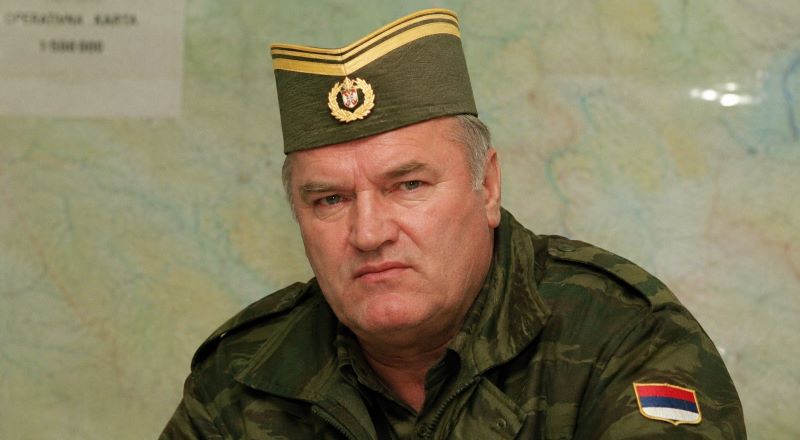
THE HAGUE: Ratko Mladic, the former Bosnian Serb army commander convicted of genocide and war crimes, has died at the age of 85 while serving a life sentence, a United Nations official said on Thursday.
Known by his opponents as the “Butcher of Bosnia”, Mladic was found responsible for some of the worst crimes committed during the 1992–1995 Bosnian War. His death came one day after a request for his early release was rejected.
Mladic was convicted of organising the 1995 Srebrenica massacre, in which more than 8,000 Bosniak Muslim men and boys were killed. The victims were buried in mass graves, with some bodies later moved to remote locations in an attempt to conceal evidence of the killings, according to Reuters.
Srebrenica had been declared a United Nations “safe area”, but Bosnian Serb forces overran the town in July 1995. The massacre became Europe’s worst atrocity since the Second World War and was later recognised as genocide by international courts.
Mladic was also held responsible for the prolonged siege of Sarajevo, where artillery, tanks, mortars and machine guns were used against civilians. About 10,000 people were killed during the siege, which lasted for much of the war.
The International Criminal Tribunal for the former Yugoslavia found that Mladic worked with former Serbian President Slobodan Milosevic and Bosnian Serb leader Radovan Karadzic as part of a criminal plan to remove Muslims, Croats and other non-Serbs from large parts of Bosnia.
He was convicted in 2017 on 10 of 11 charges, including genocide, murder, persecution, extermination, deportation, forced transfer, terrorising civilians and taking United Nations personnel hostage. His life sentence was upheld in 2021 by the UN tribunal’s successor.
Mladic rejected the authority of the court throughout the proceedings. “I do not recognise this court,” he said during a 2014 hearing. After receiving his life sentence, he called the verdict “all lies”.
For years, Mladic remained a hero to some Serbian nationalists and avoided arrest after the war. He was finally captured in the Serbian village of Lazarevo in May 2011, nearly 16 years after the Srebrenica massacre, and transferred to The Hague.
His health had deteriorated significantly. He suffered a heart attack in 2013 and later described himself as a frail and seriously ill man. A UN doctor said in August 2026 that his death could occur at any time, possibly within weeks. Nevertheless, his latest request for release was rejected on the grounds that it would not serve the interests of justice.
For many survivors, Mladic remained a lasting symbol of the suffering caused by the war. Munira Subasic, whose husband and son were killed after the fall of Srebrenica, once said: “For me, Mladic is a symbol of all the horrible crimes that happened during the war.”