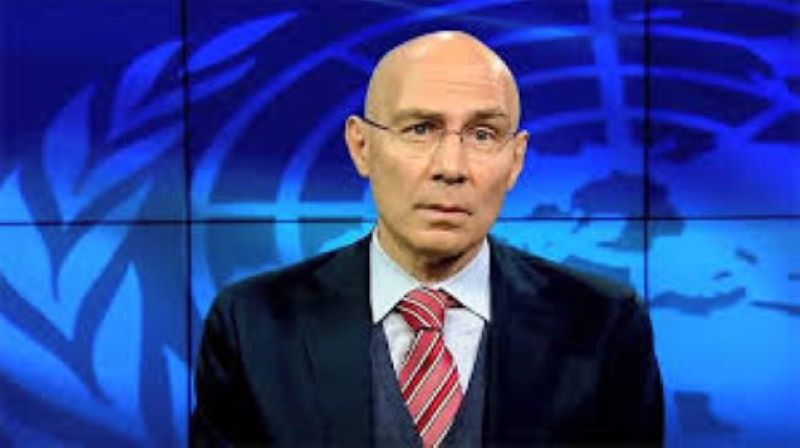
Austrian diplomat Volker Türk will continue leading the United Nations’ human rights office after winning strong backing for a second term, despite sharp criticism from several major countries.
The UN General Assembly voted on Friday to reappoint Türk as High Commissioner for Human Rights, with 144 countries supporting his continued leadership, reported by Heute. Ten countries voted against him, while 13 abstained. UN Secretary-General António Guterres had nominated Türk for another four-year term, which will begin in October and run until 2030.
The vote followed a tense and at times heated debate. Representatives from Russia, the United States, and Israel accused Türk of lacking neutrality in his role. Their criticism focused on his outspoken stance on several global issues, including Russia’s war in Ukraine, Israel’s military actions in Gaza, and deaths in US immigration detention centers, which he has called to be investigated.
Israel’s representative questioned Türk’s professionalism and leadership, arguing that he had strayed from impartiality. The United States also voiced strong concerns, with its representative saying the UN human rights system has lost credibility over time and that Türk’s leadership had worsened this trend. Washington also signaled it may reconsider its level of engagement and funding for UN human rights efforts.
Russia, meanwhile, argued that Türk had made accusations without sufficient evidence and proposed limiting his mandate to just one more year. That proposal failed to gain enough support.
Despite the criticism, Türk received broad backing from the European Union and many countries in Africa and Latin America. China also voted in favor of his reappointment.
Türk has held the position since October 2022. With this new term, he is set to become the first UN human rights chief to serve two full four-year terms since the role was created in 1993.
Recently, Türk expressed hope that human rights will remain a priority during Austria’s upcoming membership in the UN Security Council in 2027 and 2028. He also called for greater attention in Austria to global conflicts beyond Europe.