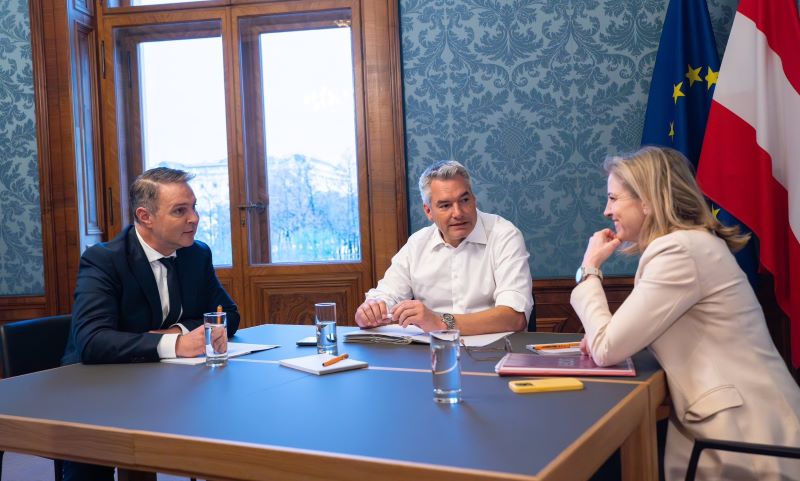
VIENNA: On Monday, Austria’s coalition negotiations resumed, with Karl Nehammer (ÖVP), Andreas Babler (SPÖ), and Beate Meinl-Reisinger (NEOS) engaging in discussions behind closed doors at the Federal Chancellery. The meeting, which followed a weekend session of the budget working group, focused on finalizing the national budget and outlining key initiatives for a potential tripartite coalition.
Despite heightened anticipation, the party leaders avoided the media spotlight, and no press conference was scheduled following their discussions. However, insider reports indicate progress in several areas. A seven-year budget consolidation plan appears to have gained cross-party support, marking a significant step toward fiscal stability. In addition, an agreement was reportedly reached within the migration subgroup to reinstate the mandatory integration year. This program, which would provide German language and civic values courses for asylum seekers, is set to become a prerequisite for positive asylum determinations, according to Der Standard.
While these developments signal movement toward consensus, the broader coalition framework remains uncertain. Former EU Commissioner and ÖVP veteran Franz Fischler weighed in on the stakes, dismissing the prospect of a conservative-right alliance between the ÖVP and FPÖ. In an interview with the Tiroler Tageszeitung, Fischler issued a stark warning: “A coalition with the FPÖ could lead to the ÖVP’s fragmentation. The party might not survive such a partnership in its current form.” He also urged Austrian industries to consider the economic repercussions of an FPÖ-led administration, emphasizing the risks to the nation’s economic stability.
The absence of public commentary from party leaders underscores the delicate nature of these negotiations, as they juggle demands for fiscal responsibility with ambitions for transformative policies. The integration year proposal, in particular, highlights the coalition’s effort to address migration challenges in a structured and pragmatic manner.
With Austria’s political future hanging in the balance, these talks are not merely about forming a government but reshaping the nation’s direction for the coming decade. As the negotiations progress, the focus will remain on bridging ideological divides to secure a sustainable and visionary coalition agreement.