

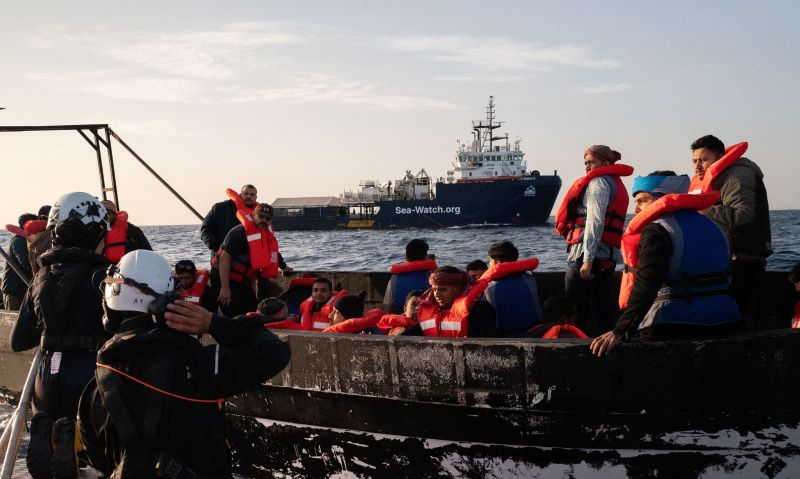
The German rescue vessel Sea-Eye 5 pulled them from two failing rubber dinghies drifting in the central Mediterranean boats so dangerously unfit for open water that simply being aboard them was a death sentence waiting to be carried out, according to ORF News. Among the survivors were men, women, and children in need of immediate medical attention. One of them, a pregnant woman, had to be airlifted by helicopter to Malta, where she could receive the care the open sea could not offer her.
The rescues, announced Tuesday by the humanitarian organization Sea-Eye, came at no small cost to the crew’s nerves. During one of the operations, a vessel belonging to the Libyan Coast Guard moved in, not to help, but to obstruct. It hovered at the edge of the scene like a warning, a reminder of how fraught and politicized the act of saving a drowning stranger has become.
“The situation in the central Mediterranean is unbearable,” said Anna di Bari, a board member of Sea-Eye. Humanitarian aid, she insisted, must not be forced to operate under such conditions.
Her words carry fresh urgency. Just the day before, activists reported that the Libyan Coast Guard had opened fire on the Sea Watch 5, another NGO rescue ship. The European Union has since asked Libya for clarification, a diplomatic euphemism that carries the weight of its own contradictions. Since 2017, the EU has channeled approximately 59 million euros into an Italian-led initiative to cooperate with that very same Libyan Coast Guard.
That tension is not lost on the humanitarian community. After shots were fired at the rescue ship Ocean Viking in late August last year, organizations including Amnesty International and Médecins Sans Frontières called on the European Commission to end its cooperation with the Libyan Coast Guard entirely. So far, the money keeps flowing and so do the boats. __Photo Courtesy Sea Watch International





