Imran Khan’s cross-ethnic popularity reflects emerging Pakistani nationalism shaped by shared values and media influence, and dismantling this belief may trigger political and social instability
Umer Farooq
The mutual abhorrence of different ethnic nationalities that form part of Pakistan is well known. The Punjabi, Pashtun, Urdu speaking and Sindhi make fun of each other in each other’s absence. Punjabis enjoy good laughs when they cut jokes about Urdu Urdu-speaking people of Karachi. Urdu-speaking people are no less derogatory about Punjabis and Pashtuns. And Pashtuns in turn are the subject of jokes among all other ethnic nationalities in Pakistan. But it would be wrong to say that these ethnic nationalities don’t share values, political culture, and aspirations. They do and we see many manifestations of these shared values and shared aspirations in social and political life in Pakistan.
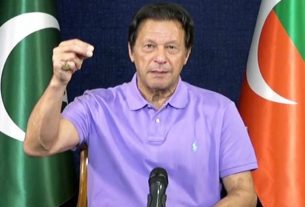
I think the strongest manifestation of Pakistani nationalism and shared values and shared political aspirations among different nationalities in our society is the popularity of jailed former Prime Minister, Imran Khan. Now What I am going to say about Imran Khan is not based on any scientific data. What I am going to say is based on my analysis which in turn is based on anecdotal evidence, some public opinion polls, media reporting, and background interviews with opinion makers, government officials, and journalists. Imran Khan is now as popular in Pakistani society as Zulfiqar Ali Bhutto and Benazir Bhutto once were. Imran Khan shares another characteristic with both the Bhutto—he has truly transcended ethnic boundaries in Pakistani society. Why are Urdu Speaking of Karachi, Punjabi of Lahore Pashtun of Peshawar, and Swat equally enthusiastic about supporting Imran Khan? Because all of them have shared cultural values and shared political aspirations. And this is what I describe as the strongest manifestation of Pakistani nationalism.
These shared political aspirations and shared cultural values are a product of what we see on electronic media and social media, political and social culture manifested in the realm of media, both electronic and social, as a projection of our cultural and political life. Political sloganeering, meme-making, jokes, political propaganda, religious preaching, cultural performances, songs, media campaigns, political messages, anti-government messages, anti-military messages, brand Imran Khan campaigns, and many other types of messages all go from this culture. How Imran Khan, in this vibrant social and electronic media culture, attained the status of a political leader who is more popular, who has transcended ethnic boundaries, and who became the focus of Punjabi, Urdu-speaking, and Pashtun shared political aspirations and shared social and cultural values should be the subject of scientific study. I don’t think that mere speculative analysis can do justice to this subject.
Imran Khan’s popularity is a product of the make-believe world of social and electronic media—while telling a story the storyteller wants the listeners to believe certain things to be true and they believe him or her or they take that thing to be true
However, my analysis cannot go any further, if we don’t base it on the assumption that this vibrant media culture converted Imran Khan into a most popular leader in Pakistani society. I can even put forward evidence in support of this assumption—the results of the last parliamentary elections. PTI almost swept the election in KP, was neck to neck with PMLN in Punjab, and secured a sizable chunk of votes in Sindh and Balochistan. Even in Karachi, considered a stronghold of MQM, Imran Khan secured a sizable number of votes. Is it a good development for Pakistan? Well, if you are not some civil or military bureaucrat, who believes in imposing classroom discipline in social and political life in the society, you should be sure that it is a very good development in the history of Pakistani nationalism. Why? Pakistani nationalism started its life from scratch—we didn’t have any bases for shared political and social aspirations and values, apart from some abstract belief in the cohesive role that religion would play in national life. The idea of Pakistan as a Muslim nation-state took birth in Muslim minority provinces of British India. The regions that formed part of Pakistan didn’t see any popular movements in support of the creation of Pakistan.
Pakistan’s founding political party, Muslim League didn’t have any organisational structures in large chunks of what would become Pakistan territorially. East Bengal which later became East Pakistan and yet later Bangladesh, was the only part of Pakistan where the Muslim League had a vibrant political structure and popular following. When Pakistan came into being, according to one political historian, the power was not transferred from British Raj to popular political leadership, it was transferred from British bureaucracy to native members of the bureaucracy, who were mostly from Urdu-speaking middle classes and Ashrafiya (elite) from United Provinces of British India.
This native bureaucracy had no root in the local societies in the territory that formed Pakistan and started to reject ethnic nationalities, which started to demand great autonomy under the tutelage of the Pakistani state. Their languages, cultures, their arts, music, and other manifestations of cultural life were oppressed. And in this oppression, the Urdu-speaking bureaucracy saw the birth of the Pakistani state. Bengalis should translate Bengali literature into Arabic, was one of the suggestions which came from this bureaucracy and their clergy well versed only in medieval practices. Baluch doesn’t have any history, there were other assertions that came along.
Pakistani nationalism became a failed and oppressive state-directed project. It had no social or political base. Urdu was a lingua franca only on bureaucratic papers. Do you know which development made Urdu the truly nationwide lingua franca? The advent of electronic media. Urdu became a fashion not only in Lahore, Karachi, and Islamabad. I have seen people conversing in Urdu, using vocabulary provided to them by electronic media in North Waziristan and even in remote parts of Balochistan. The British steel frame kept India together as a political unit for more than 100 years but did not transform it into a nation. In Pakistan, the bureaucracy and the military tried to rule Pakistan in the same steel frame tradition, with no positive developments for Pakistani nationalism. This claim of mine is not based on any scientific data. Rather it is based on my experience of reporting in the Northwest and my travelling in Balochistan.
Imran Khan is again the leader of the Pakistani middle class, and we cannot predict how long his popularity will last
Imran Khan as a political leader is a child of electronic and social media. Imran Khan’s popularity is a product of the make-believe world of social and electronic media—while telling a story the storyteller wants the listeners to believe certain things to be true and they believe him or her or they take that thing to be true. Here, social media is the storyteller, and the Pakistani public—Punjabi, Pashtun, Urdu speaking—are the listeners. The social media wants the public to believe that Imran Khan will completely transform Pakistan, and it wants listeners to believe this to be true, no matter what the realities are. The truth of the matter is that Pakistani people are living in this make-believe world of social media. Interestingly, it would not be an exaggeration to suggest that almost all modern societies are living in this make-believe world.
Take the example of American society. The American state, political leaders, and media want the American people to believe that America is a land of equal opportunity and a land of dreams. Now this is a make-believe world of American society, which is far from true. Economists, sociologists, and political experts have written book after book to reveal the truth that America is no longer a land of equal opportunities, it is a society inflicted by deep levels of social inequalities that have been unchanging for generations. Now we can say that American society’s political, economic, and social structure and its vibrancy are based on this make-believe world where people believe that they are living in the land of dreams. If this belief is removed from the social and political life of American society, everything will collapse—its economic vitality, and social and political stability.
Those who are conspiring to destroy Imran Khan’s popularity are in fact culpable of taking away the belief of Pakistani masses. They are living in a make-believe world. Let them believe in something. You don’t know what monster will emerge from our social and political life if you remove or take away this belief from Pakistani people. Let me give you an example. You removed another popular leader, Zulfiqar Ali Bhutto from the political scene more than four decades ago, who was the most potent reality of Pakistani people’s world of make-believe. You don’t have to recall what monsters took birth in this vacuum that you created—religious extremism, social fragmentation, and a directionless society.
Imran Khan is again the leader of the Pakistani middle class, and we cannot predict how long his popularity will last. It is a fast-changing world where information is bombarded on the screens of your smartphone. Pakistani state machinery can create another make-believe reality. But remember taking away Imran Khan’s focused make-believe world from the Pakistani public could have horrendous implications. If you have doubts, please read the history and try to find out what happened after elder Bhutto.
There is a piece of advice for Imran Khan as well: Pakistan is a political wonderland and anything could happen here. That includes the restoration of Imran Khan as a normal political figure on the political scene. In that case, I have three pieces of advice for Imran Khan: First, forget about your personal plight and what others have done to make you suffer in jail. If Imran Khan embarks on the path of revenge, Pakistan will be destroyed. Secondly, you must be super intelligent, not ordinary smart or intelligent, super intelligent. The enormity of the problem Pakistan state and society are facing could not be comprehended by a man of ordinary intelligence.
Of course, no one man could become super intelligent overnight. My advice to Imran Khan is to gather a team of super-intelligent people around you. The people around you are goofs you cannot achieve anything with their help. Thirdly, you need to show super patience. The people you think are your enemies are not your enemies. Pakistani society and state are facing much bigger threats to their survival than you have the ability or information to comprehend. In other words, get ready to utilise your popularity or the make-believe world of Pakistani people. Things are bad and we are facing very bad times ahead of us.__This is an artical of The Friday Times Pakistan on 15.04.2025