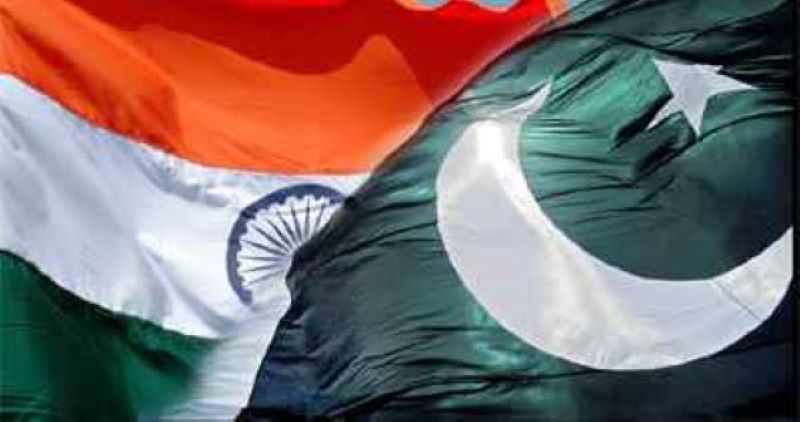
Modi’s aggressive diplomacy post-Pahalgam attack backfired, isolating India as Pakistan gained global credibility through strategic restraint
By Mirza M. Hamza
In the intricate chessboard of South Asian diplomacy, Prime Minister Narendra Modi fancies himself a grandmaster. Yet recent moves suggest he’s playing an emotional blitz game rather than measured strategic chess, leaving India increasingly isolated and ironically undermining its own hard-earned regional credibility.
The 22 April Pahalgam attack was a crisis demanding clarity and composure. Instead, Modi’s national address struck a “lesson-teaching” tone, promising Pakistan would “pay”, followed by Operation Sindoor—intended as a deterrent. But this blitz of nationalist symbolism—complete with references to Partition and “unfinished business”—quickly lost its punch on the world stage.
Even more puzzling was India’s unilateral suspension of the Indus Waters Treaty (IWT)—a move presumably meant to show strength, but in game-theory terms, akin to sacrificing your queen in a gambit you never planned to win. By playing such an aggressive opening, India handed Pakistan the legal upper hand to re-internationalise Kashmir at the UN.
Meanwhile, Pakistan—despite economic and climate stress—played a strategic counter: Bilawal Bhutto-Zardari led delegations to Washington, Brussels, London, and the UN, while PM Shehbaz Sharif met Erdoğan in Istanbul, solidifying a Turkey–Pakistan axis on defence and tech. India’s ripostes—unofficial Turkish product boycotts, cancelled flight bookings, and aviation penalties—played well domestically but globally came off as petty tantrums.
By trying to dominate every rhetorical battlefield, India risks losing the far more consequential
war of influence and credibility
Institutionally, Pakistan advanced: securing the UNSC presidency for July 2025, a vice-chair seat on the UN Counter-Terrorism Committee, and chairing the 1988 Taliban Sanctions Committee. India’s early battlefield gains vanished—not on the ground, but in global diplomatic corridors.
Then came the CENTCOM revelation. On 12 June, General Michael Kurilla labelled Pakistan a “phenomenal partner” in counterterrorism—undermining India’s effort to recast Pakistan as rogue. It was a public relations knockout.
Domestically, the misfires amplified. A 19-year-old Pune student was arrested on 9 May for reposting a critical message about Operation Sindoor—only to be released days later following Bombay High Court admonishment, which criticised the state for treating her like a criminal. Opposition parties further accused Modi of bowing to President Trump’s mediation pressure.
Game-theory insights illustrate the danger. In the iterated prisoner’s dilemma, repeated cooperation builds trust and long-term payoff. Modi, however, repeatedly chose defection: escalating military posturing, suspending treaties, and wielding nationalistic rhetoric. Pakistan, by contrast, consistently cooperated—advocating international inquiries, invoking legal mechanisms, and extending diplomatic openness. Through successive rounds, Pakistan accumulated credibility while India’s aggressive plays floundered.
India may debate the outcome of Operation Sindoor or deny that a “war” even occurred, but in the domain that matters most—global perception—Pakistan is clearly winning. With its UN presidency, procedural footholds, and strategic Muslim alliances, Islamabad has achieved what tanks and tirangas could not: a credible, institutionalised platform to reshape the narrative. India’s military muscle may win a battle; Pakistan’s diplomacy is scripting the endgame.
Even symbolic diplomacy backfired. Modi’s visit to Cyprus—intended as a rebuke to Erdoğan—only solidified the Turkey–Pakistan–Iran–Qatar bloc, drawing them closer under shared Gaza solidarity. Rather than cracking alliances, India unintentionally strengthened them.
With Pakistan’s UNSC presidency approaching, New Delhi finds itself relegated to the sidelines. Islamabad is expected to use the platform to highlight Kashmir, water security, and global Islamophobia—issues that Iran, Turkey, Qatar, and others are now ready to champion.
The supreme irony? By trying to dominate every rhetorical battlefield, India risks losing the far more consequential war of influence and credibility. In this iterated strategic game, impulsive defection leads to isolation. And that, ironically, is precisely the game Islamabad hoped India would play.__This is an article from The Friday Times Pakistan, dated 17.06.2025