Panic, embarrassment, and awkward deflections ripple through the corridors of power as no one dares to claim responsibility. How and why a woman was included in the official delegation remains a riddle that no minister, adviser, or spokesman is willing to solve. This, within the Foreign Ministry of a nuclear power, lays bare a deeper tragedy: an institution adrift, unable to account even for its own choices.
The Pakistan’s Foreign Office (FO) has been forced into damage control following uproar over Dr. Shama Junejo’s presence at Pakistan’s delegation to the 80th United Nations General Assembly (UNGA) session, according to “The Express Tribune”.
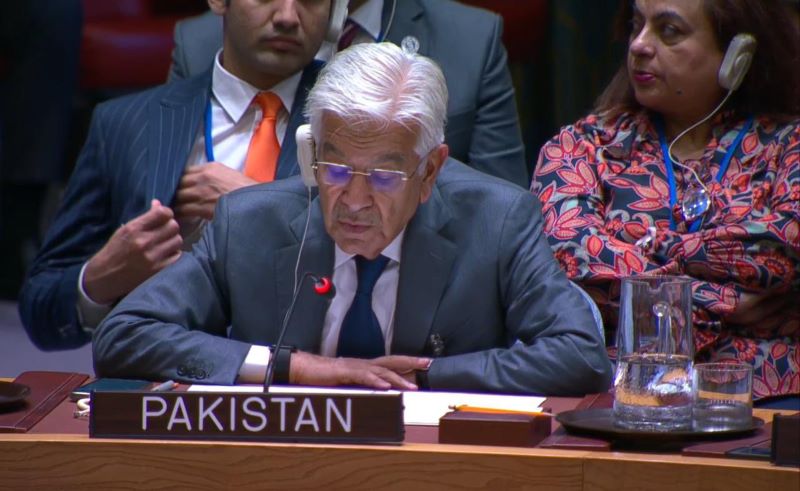
In a statement, the FO stressed that Junejo “was not listed in the official letter of credence” signed by Deputy Prime Minister and Foreign Minister Ishaq Dar. The ministry further asserted that her placement behind Defence Minister Khawaja Asif “did not have the approval” of either the Deputy Prime Minister or the Foreign Minister.
The controversy erupted after images circulated on social media showing Junejo seated directly behind Asif. Critics quickly unearthed her past posts on X, in which she expressed admiration for Israeli Prime Minister Benjamin Netanyahu. That history fueled outrage, with former federal ministers Shireen Mazari and Fawad Chaudhry lambasting the government for allowing what they described as a “supporter of Israel” to appear alongside Pakistan’s official delegation.
Asif, a longtime advocate of the Palestinian cause, himself turned publicly on the ministry he represents. Taking to X, he demanded answers: “Who is this woman? Why is she with us in the delegation? And why was she seated behind me? Only the Foreign Office can answer these questions.”
The FO’s clarification sought to draw a sharp line, insisting Junejo was never accredited as part of Pakistan’s official delegation. Yet its statement left the most pressing question unresolved: who permitted her entry and arranged her prominent seating?
For a ministry tasked with projecting the image of a nuclear power on the world stage, the episode has instead laid bare an uncomfortable truth, one of blurred lines, misplaced authority, and a failure of accountability at the very center of foreign policy.