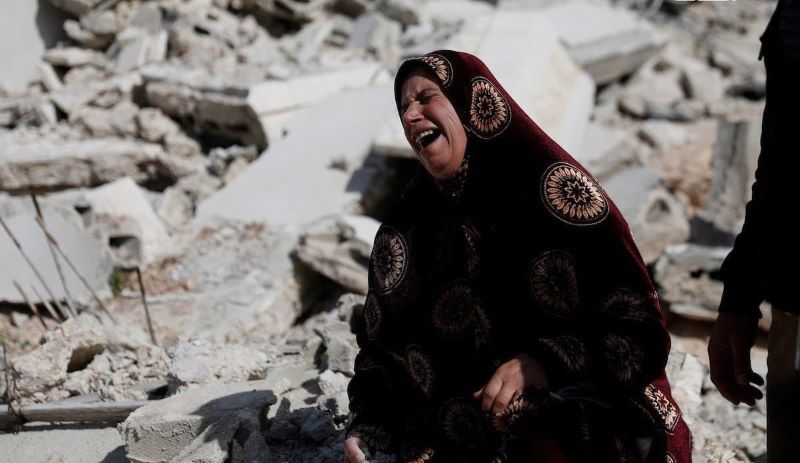
Fifteen Palestinian families packed up what they could carry and left their homes Wednesday, driven out not by war but by the steady encroachment of Israeli settlers who’ve made staying simply impossible, according to Arab News.
The families, all members of the Al-Ara’ra clan, had called the As-Satih area near Deir Al-Dik their home; a patch of land west of Jericho in the central occupied West Bank. But when settlers arrived with plows and machinery, leveling the ground around their dwellings and cutting them off from the land they’d farmed for generations, the families faced a grim choice: stay and starve, or go.
They went.
According to the Wafa news agency and the Al-Baydar Organization for the Defense of Bedouin Rights, the leveling operations destroyed agricultural lands the families depended on for their livelihoods. Without access to these fields, survival became untenable.
This displacement follows a disturbingly familiar pattern. Just last month, twenty families from the Az-Zayed clan abandoned their homes in the Shallal Al-Auja community north of Jericho. Their departure came after months of escalating settler threats, blocked access to traditional grazing pastures, and systematic vandalism of their property.
These aren’t isolated incidents. The Al-Ara’ra and Az-Zayed clans join a growing list of Bedouin communities forced from lands their ancestors inhabited for generations. The tactics vary sometimes it’s direct violence, other times it’s economic strangulation through land seizures but the result remains the same: empty homes and displaced families.
The UN’s humanitarian agency OCHA documented at least 694 Palestinians forcefully displaced from their homes in January alone. That’s nearly 700 people in a single month, their lives uprooted, their futures uncertain.
For the fifteen families who left Wednesday, the displacement means starting over somewhere else, likely in overcrowded urban areas far from the pastoral life they knew. Their fields, now flattened by settler plows, stand as silent testimony to what was lost, not through natural disaster or economic hardship, but through deliberate human action.