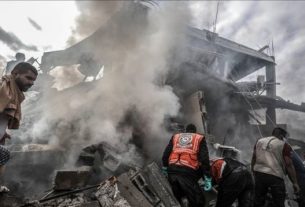
Iranian President Masoud Pezeshkian has promised that his country will rebuild everything destroyed during the recent wave of air strikes, declaring that Iran will emerge “better than before” despite nearly two weeks of war with the United States and Israel.
In a message posted on the social media platform X, Pezeshkian said that 15 days had passed since what he described as an “imposed and unjust war.” He added that although the fighting has caused serious challenges for transportation, communications and other services, the Iranian government has managed to keep basic services running for the public.
“With the companionship of the noble people of Iran, we will overcome these conditions and rebuild everything they have destroyed even better than before,” he wrote.
The conflict has rapidly grown into one of the most serious confrontations in the Middle East in years. Air strikes, missile attacks and drone operations have been reported across several countries, raising fears that the war could expand further across the region.
Meanwhile, U.S. President Donald Trump said American and allied warships were moving toward the Strait of Hormuz to keep the vital shipping route open. The narrow waterway is one of the world’s most important energy corridors, carrying roughly one-fifth of global oil supplies.
Trump warned that the United States would continue military operations against Iranian targets and would not tolerate attempts to disrupt shipping in the strait.
“Iran has been totally defeated and wants a deal but not a deal that I would accept,” Trump wrote on his Truth Social platform.
His comments followed reports of major American strikes on Kharg Island, Iran’s main oil export terminal. The island handles about 90 percent of Iran’s crude oil shipments. Trump described the attack as “one of the most powerful bombing raids in the history of the Middle East.”
However, U.S. officials later said the strikes targeted military facilities on the island, including air defenses and a naval base, rather than the oil infrastructure itself. Iranian media also reported that while more than 15 explosions were heard, the country’s oil facilities were not damaged.
Still, Trump warned that energy infrastructure could become a target if Iran continues to threaten shipping in the Strait of Hormuz.
Iran’s armed forces responded by saying that any attack on the country’s oil facilities would lead to retaliation against energy sites owned by companies cooperating with the United States in the region.
At the same time, tensions have spread beyond Iran and Israel. A missile strike hit the U.S. Embassy in Baghdad on Saturday, according to Iraqi security sources. Smoke was seen rising from the embassy compound, though the extent of the damage remains unclear.
Iranian state television also reported that its air defenses shot down five drones, raising the total number of American and Israeli drones it claims to have destroyed since the start of the war to 114.
The conflict has also affected neighboring countries. Iran’s Revolutionary Guard said it carried out additional attacks on Israel together with the Lebanese militant group Hezbollah. Israel, in turn, reported striking more than 200 military targets across western and central Iran, including missile launchers and weapons facilities.
Beyond the battlefield, the war is already shaking global markets. Oil prices have swung sharply as traders worry about possible disruptions to supplies, especially if fighting affects shipments through the Strait of Hormuz.
Despite the dangers, Iran has continued exporting crude oil. Satellite images showed several large oil tankers loading at Kharg Island earlier this week.
After nearly two weeks of fighting, the human cost is rising. About 2,000 people have been killed, most of them in Iran, while many others have died in Lebanon and other parts of the Gulf region. Millions have also been displaced from their homes as air strikes continue.
For now, the war shows no clear sign of ending. When asked how long the conflict might last, Trump said only that it would continue “as long as it’s necessary.”