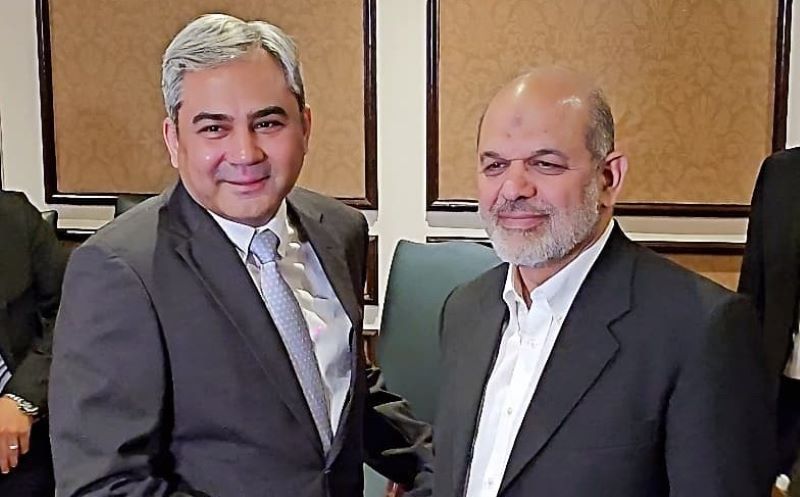
Pakistan’s Interior Minister Mohsin Naqvi returned to Tehran on Wednesday for his second visit in less than a week, as diplomatic efforts to ease tensions between Iran and the United States entered a critical stage, according to PTV.
The visit comes amid ongoing regional instability and renewed international attempts to revive stalled negotiations between Washington and Tehran. During his meetings in the Iranian capital, Naqvi held talks with senior Iranian officials, including Interior Minister Eskandar Momeni and senior military figures from the Islamic Revolutionary Guard Corps (IRGC). He is also expected to meet President Masoud Pezeshkian and Foreign Minister Abbas Araghchi.
Diplomatic sources familiar with the discussions said the latest talks focused on a new American proposal aimed at reducing tensions and preventing further conflict in the Middle East. The proposal reportedly includes discussions on sanctions relief and frozen Iranian assets, though disagreements over Iran’s nuclear programme remain unresolved.
According to officials close to the negotiations, Iran and the United States continue to differ sharply on the conditions required for a lasting agreement. Washington is said to be pushing for immediate discussions on Tehran’s nuclear activities before any permanent ceasefire, while Iran insists broader regional conflicts and sanctions issues must also be addressed.
The negotiations follow months of rising tensions in the region after military strikes and retaliatory attacks deepened fears of a wider conflict. A temporary ceasefire brokered earlier this year helped reduce immediate violence, but diplomatic efforts since then have struggled to produce a long-term solution.
Iranian leaders have repeatedly stressed that regional security should depend on stronger cooperation among neighboring states rather than foreign military involvement. Tehran has also praised mediation efforts aimed at encouraging direct dialogue and preventing another escalation.
Observers say the latest round of meetings reflects growing urgency among regional powers to preserve stability as fragile negotiations continue behind closed doors. Despite ongoing disagreements, diplomatic channels remain open, offering a narrow but important path away from renewed confrontation.