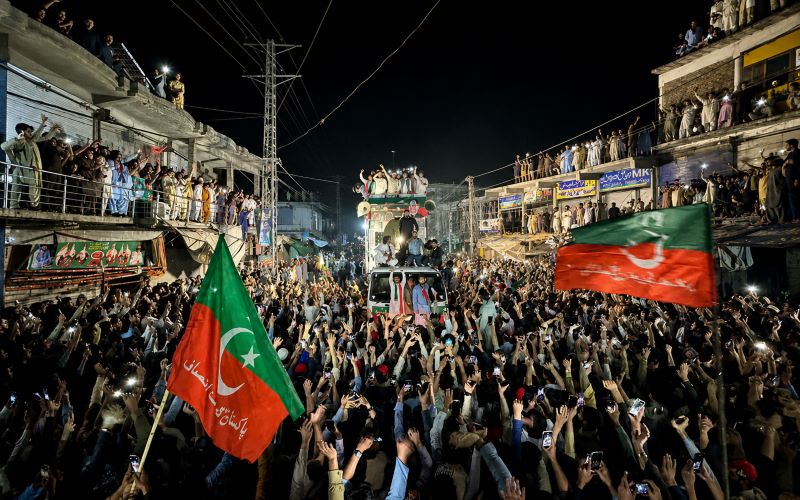
PESHAWAR, Oct. 7: Pakistan’s opposition Pakistan Tehreek-e-Insaf (PTI) has stepped up its protest against the government’s security policy, as a long march led by Khyber Pakhtunkhwa Chief Minister Sohail Afridi moved through Khyber district on Wednesday.
The march, organised to demand the release of jailed PTI founder and former prime minister Imran Khan, has also become a platform for the party to voice its strong opposition to further military operations in Khyber Pakhtunkhwa.
Addressing supporters in Khyber, Afridi said he would not allow another military operation in the province and vowed to resist what he described as “anti-people policies” as long as he remained chief minister. PTI argues that military operations have continued in parts of KP for more than two decades without bringing lasting peace, reported by Dawn News.
The party has particularly pointed to the suffering of communities displaced by past operations. Afridi referred to residents of Tirah, saying families had faced severe hardships after leaving their homes to facilitate a military operation. Displaced families have also raised concerns over financial assistance and other commitments made by authorities.
PTI’s opposition has now become part of a wider political dispute with Islamabad over counterterrorism policy. The party says another military led approach cannot solve the province’s security crisis and has called for a different policy to restore peace. Afridi has claimed that PTI could offer an alternative plan capable of improving security without another major operation.
The party and its supporters have also voiced broader allegations against Pakistan’s security establishment. In protests and political statements, PTI supporters have criticised the military over alleged involvement in political affairs and have raised accusations concerning mineral smuggling and the treatment of civilians during security operations. Such allegations remain disputed and have not been independently established.
In areas affected by violence, residents have also protested what they describe as drone attacks that have caused civilian deaths and injuries. Demonstrators in Hassankhel, for example, alleged that drone strikes had killed civilians, including women and children, and damaged public infrastructure. They demanded compensation and stronger measures to protect local communities.
PTI has further accused state institutions of failing to protect civilians and has linked its opposition to military operations with a broader demand for accountability and peace. The party has also sharply criticised what it describes as policies that have allowed terrorism to continue despite years of security operations.
The government, however, maintains that Pakistan faces a serious militant threat and has defended its counterterrorism policies. Security officials have repeatedly pointed to attacks by militant groups in KP, while the federal government has accused PTI of failing to cooperate fully with its counterterrorism strategy. PTI rejects that criticism.
The growing confrontation has turned the long march into more than a demand for Imran Khan’s release. It has become a political expression of PTI’s resistance to Islamabad’s security policy and its increasingly open criticism of the country’s powerful military establishment.
For now, the march continues through KP, with its final route still subject to change. What began as a protest for Khan’s release is increasingly carrying a wider message from the province; PTI wants security without another military operation, and it wants the grievances of civilians in conflict hit areas to be heard.