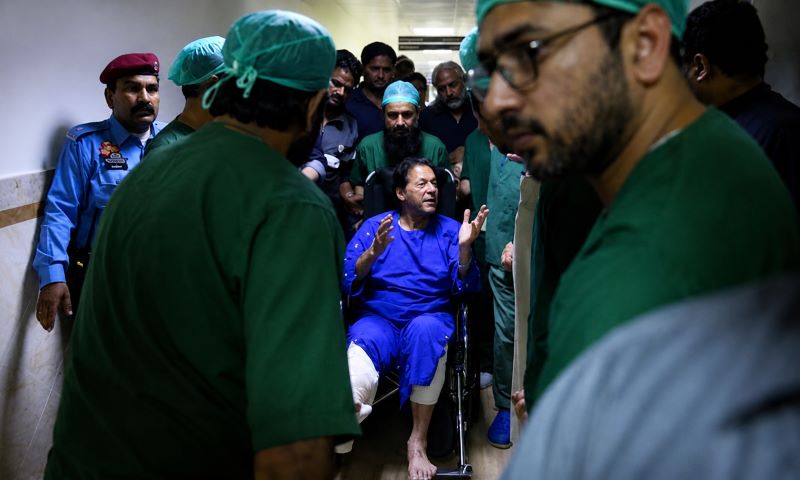
The Pakistan government has asked the Supreme Court to review its order directing the transfer of jailed former prime minister and Pakistan Tehreek-e-Insaf (PTI) founder Imran Khan to Shifa International Hospital in Islamabad, calling the decision “discriminatory in nature.”
The review petition, filed through Islamabad Chief Commissioner Syed Waqar Hussain, argues that the court’s August 18 order went beyond its legal authority and overlooked the Pakistan Prison Rules, 1978. The government says these rules clearly set out how prisoners can be moved outside jail for medical treatment.
At the heart of the government’s argument is Rule 197, which requires the relevant government approval before a convicted prisoner can be admitted to an outside hospital for special treatment, except in emergencies. The government also pointed out that prisoners taken to outside hospitals must remain under police guard and that treatment expenses are handled through the health department, according to The Express Tribune.
The petition further challenges the order on constitutional and procedural grounds. It argues that the authorities were not given proper notice before the court issued directions affecting the administration of the prison system. It also invokes Article 10A of the Constitution, which guarantees the right to a fair trial and due process.
The government has also objected to the court granting, at the interim stage, nearly all the relief sought by Imran. These included his transfer to Shifa International, access to his personal doctors, meetings with family members during treatment and access to medical records for his lawyer.
According to the petition, granting all these requests before the main case was fully heard left little for the court to decide later. The government described the move as legally unwarranted.
Another major concern raised by the government is equal treatment of prisoners. It argued that allowing one convicted prisoner to receive treatment at a private hospital of his choice could encourage other prisoners to demand similar privileges. The petition warned that such a precedent could place pressure on the existing prison system.
The government has also questioned the medical basis of the Supreme Court’s decision. It says Imran has been regularly examined by medical boards and prison doctors and argues that the court should have sought further expert medical advice before concluding that his condition had deteriorated.
Meanwhile, government ministers have accused PTI of turning Imran’s health into a political issue. Information Minister Attaullah Tarar said the government supported Imran’s right to medical treatment but questioned whether a private hospital could be specially chosen for a prisoner.
The government’s position has been closely watched because the Supreme Court had also ordered the formation of a multidisciplinary medical board and directed authorities to provide Imran’s complete medical records. It allowed his personal physician Dr Faisal Sultan and his sister Dr Uzma Khan to remain involved in his medical care.
A recent medical report said Imran had experienced fluctuating blood pressure, headaches, palpitations, restlessness and anxiety. It also said he had undergone at least 39 medical check-ups since his imprisonment. PTI, however, has questioned the completeness of the records and demanded examinations by his personal doctors and an independent medical board.
The Supreme Court has fixed the matter for further hearing on September 16. Until then, the dispute over Imran’s treatment remains caught between questions of law, prisoner rights and the deeply political atmosphere surrounding his imprisonment.