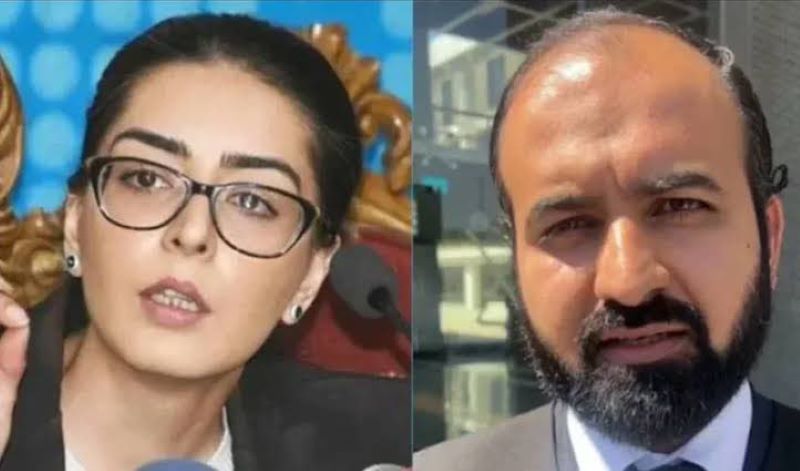
ISLAMABAD: An anti-terrorism court (ATC) has disposed of a petition seeking to drop terrorism charges against human rights lawyer Imaan Mazari and her husband, lawyer Hadi Ali Chattha, in a case linked to the removal of security barriers erected for the movement of the visiting English cricket team. The court said it could not grant the requested relief at this stage without hearing arguments from their lawyers, who had boycotted the proceedings, according to Dawn News.
At the heart of the case is an allegation that the couple removed security barriers and were involved in protests and road blockages. The incident raises a pointed question: how did a dispute involving security arrangements and public movement become a terrorism case?
The defence maintains that the accused deserve due process and a fair trial. As presented in the case, the alleged conduct concerns the removal of police barriers associated with VIP movement. The broader context also matters: the couple are lawyers, and their legal work and court appearances have become central to concerns surrounding their treatment by state authorities. However, the available account does not independently establish that they were on their way to court when the alleged barrier removal occurred.
During Saturday’s hearing, ATC Judge Tahir Abbas Sipra questioned why the accused had not been brought to court in person, despite an earlier order directing their physical or video link appearance. The couple eventually appeared through a video link after the judge demanded an explanation from jail authorities.
A report submitted to the court attributed their absence to Islamabad Police’s failure to provide the necessary escort. Defence lawyer Zainab Janjua criticised the situation, arguing that the state could not reasonably seek to proceed with witness statements while failing to ensure the accused could attend their own hearing. She said this failure undermined their right to a fair trial.
Chattha also questioned how their constitutional protections were being respected when they had not been physically produced before the court. The hearing highlighted the tension between the state’s efforts to advance the prosecution and its responsibility to ensure that the accused can participate meaningfully in legal proceedings.
The couple had challenged the framing of terrorism charges before the Islamabad High Court, with their petition scheduled for hearing on Monday. Judge Sipra observed that the pending challenge did not automatically prevent the trial court from continuing its proceedings.
Mazari and Chattha have been in custody since their arrest on January 23 in a separate case linked to a protest outside the Islamabad High Court and allegations of manhandling the president of the IHC Bar Association. They were later sentenced to 17 years in a separate case involving controversial social media posts under the Prevention of Electronic Crimes Act. The Supreme Court suspended those sentences on September 17, ordering their release pending the high court’s final decision on their appeals.
Their release, however, was followed by another arrest in the present case. The original FIR included allegations of disobedience of a public order, wrongful restraint, criminal intimidation, assault or force against a public servant, and obstruction of official duties. According to the report, no provision of the Anti-Terrorism Act was included when the FIR was initially registered.
The latest proceedings leave larger questions about proportionality, accountability and access to justice. For a human rights lawyer now facing terrorism charges, the case has become more than a courtroom dispute: it is a test of whether the law can protect the rights of the accused even when the accused are themselves challenging the state.