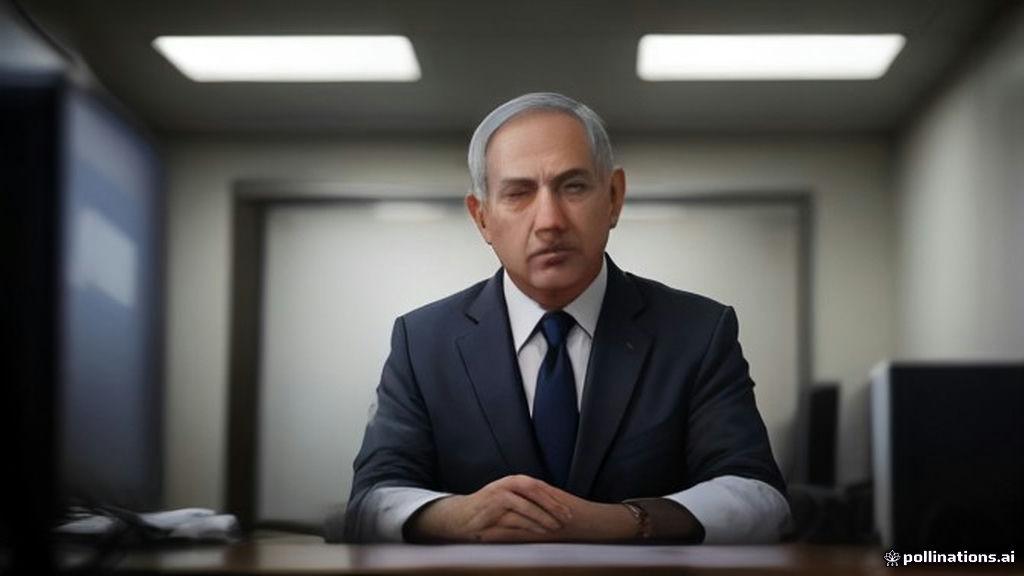
Prime Minister Benjamin Netanyahu has stunned regional observers by initiating high-stakes coalition talks with political rival Gadi Eisenkot, offering a pathway toward a broad unity government amid surging internal and external pressures. Facing a legitimate risk of losing power as his governing coalition strains under severe policy disputes, Israel’s veteran leader has signaled a willingness to restructure the executive branch entirely. This dramatic pivot arrives against a backdrop of complex regional security challenges and mounting domestic demands for administrative stability.
- Israeli Prime Minister Benjamin Netanyahu has initiated high-stakes coalition talks with political rival Gadi Eisenkot.
- Facing severe political pressure and the risk of losing power, Netanyahu proposed forming an emergency unity government.
- Reports indicate unprecedented terms, including a potential leadership rotation allowing Eisenkot to rule first.
- Regional and domestic security challenges serve as the immediate catalyst for these sweeping political realignments.
Ground Realities & Latest Developments
Political corridors in Jerusalem are currently abuzz as intermediaries coordinate direct meetings between Netanyahu and Eisenkot. Sources close to the negotiations reveal that the proposed framework goes far beyond a standard ministerial power-sharing agreement. In a surprising concession designed to stabilize the administration, the discussions contemplate structural changes to executive authority. Observers note that the urgency of the moment has forced Netanyahu to consider terms that would have been unthinkable just months ago, reflecting a rapidly shifting parliamentary arithmetic.
Historical Context & Policy Background
To understand the gravity of the current talks, one must examine the fragility of recent Israeli coalitions. Netanyahu has historically relied on narrow right-wing alliances to maintain his majority. However, ideological friction, budgetary disputes, and ongoing national security demands have eroded the durability of these partnerships. The concept of a unity government is not unprecedented in Israeli history—previous crises have prompted ideological adversaries to form emergency cabinets—yet a proposal involving a leadership rotation with a direct rival marks a watershed moment in contemporary statecraft.
Voices from the Valley: Community & Expert Perspectives
Political analysts and citizens alike are divided over the sincerity and viability of the proposed partnership. While some view the overture as a statesmanlike response to national vulnerability, others interpret it as a survival tactic for a beleaguered prime minister.
“When survival is on the line, political paradigms shift overnight. A unity government under these terms would completely redraw the electoral map.”
Civil society groups emphasize that any governance pact must prioritize transparent policymaking and address pressing socioeconomic concerns alongside national defense priorities.
Data Breakdown & Key Metrics
Political Landscape Overview
| Metric | Current Status |
|---|---|
| Current Coalition Stability | Vulnerable / Strained |
| Proposed Framework | Emergency Unity Administration |
| Key Negotiation Point | Leadership Rotation Terms |
Strategic Ramifications & The Road Ahead
The unfolding dialogue between Netanyahu and Eisenkot carries profound implications for the broader Middle East. Foreign allies are closely monitoring the talks, viewing Israeli political stability as a cornerstone of regional deterrence and diplomacy. Should the coalition talks succeed, the resulting administration will face the monumental task of harmonizing fractured political factions while managing complex foreign policy engagements. Conversely, a breakdown in negotiations could trigger snap elections, plunging the nation into an unpredictable electoral cycle.
Frequently Asked Questions (FAQ)
Why is Netanyahu offering a unity government now?
Netanyahu faces intense political pressure and the risk of losing his parliamentary majority, prompting him to seek a broader coalition to ensure stability.
What role does Gadi Eisenkot play in these discussions?
Gadi Eisenkot is a key political rival and former military chief whose inclusion is seen as vital for bridging ideological divides and restoring public trust.
Will there be a leadership rotation?
Reports indicate that terms under discussion include a potential rotation agreement allowing Eisenkot to lead the government first.
Reporting by our international desk in Jerusalem. Ground verification completed under standard editorial guidelines.