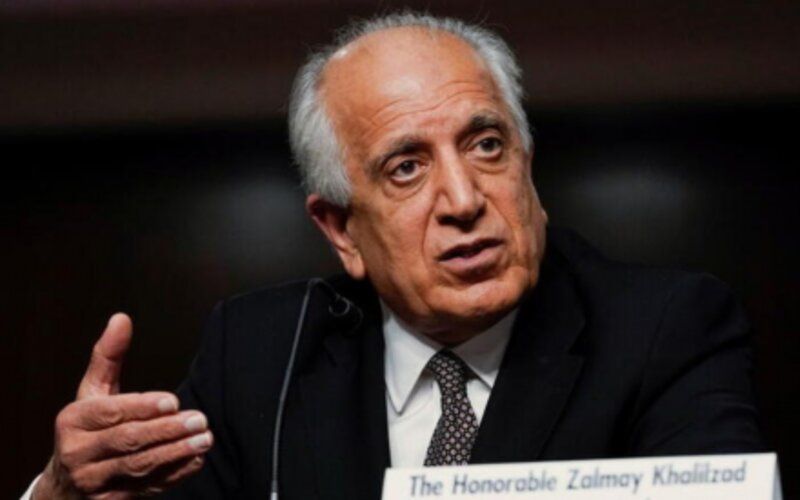
Kabul — Former U.S. envoy to Afghanistan Zalmay Khalilzad has sharply criticized Pakistan’s backing of an upcoming gathering of exiled Afghan politicians, warning that the move will further strain already fraught relations between the two neighbors, reported by TOLOnews.
The meeting, set for August 25–26 in Islamabad and hosted by the South Asian Strategic Stability Institute, aims to bring together Afghan exiles to discuss peace and stability. Pakistani media have described it as a dialogue for mutual understanding.
Khalilzad, however, dismissed the effort as reckless. Writing on X, he said: “Afghanistan and Pakistan have an enormous deficit of trust and cooperation. This step by Islamabad can only achieve the opposite. Immature, irresponsible, and unfortunate.”
Afghan analysts echoed his concerns. Political commentator Saleem Paigeer argued that Pakistan is once again trying to empower figures once dependent on its patronage to wage “proxy wars” in Afghanistan. Others noted that the lack of unity among Afghan politicians abroad has created an opening for Islamabad.
“While no consensus has been reached among Afghan politicians abroad on resolving national issues, Pakistan wants to exploit this gap for its own benefit,” said Najibur Rahman Shamal, an international relations analyst.
Meanwhile, Pakistan’s army chief Asim Munir has warned Afghanistan that it must prevent fighters of the Tehrik-i-Taliban Pakistan (TTP) from using Afghan soil to launch cross-border attacks. Afghan officials have consistently rejected claims of harboring the TTP, insisting that Kabul seeks good relations with Islamabad and does not wish to see conflict spill across the frontier.
Analyst Moingul Samkanai urged diplomacy, saying accusations must be backed by credible evidence. “At the moment, such documents do not exist,” he noted.
As the August meeting approaches, what some describe as dialogue for peace others see as a provocation—an illustration of how Afghanistan remains at the center of competing narratives, contested loyalties, and unresolved mistrust.