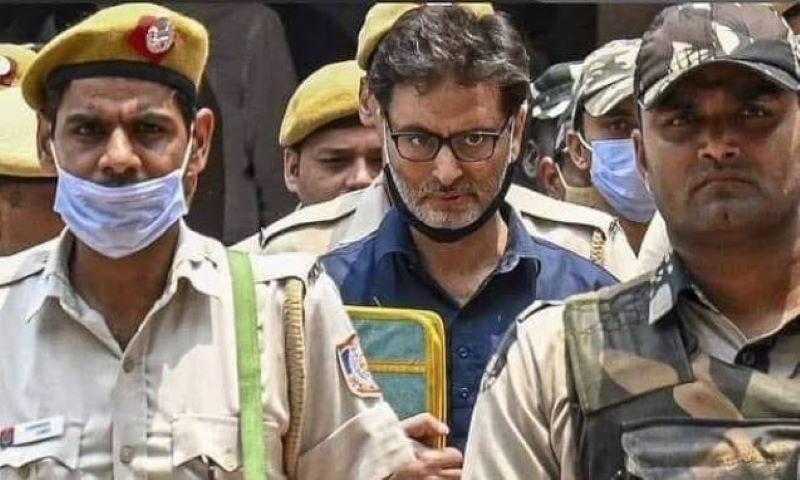
MIRPUR, AJK: The Jammu and Kashmir Liberation Front (Y) has filed a formal petition before the United Nations Special Procedures Branch (UNSPB) and the UN Working Group on Arbitrary Detention (UNWGAD), seeking urgent intervention for the release of its incarcerated chief, Yasin Malik, who has been imprisoned in India’s Tihar Jail for more than six years, according to APP.
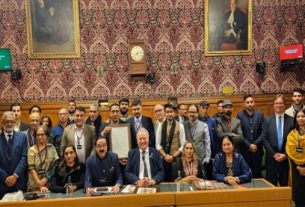
At a press conference in Islamabad on Wednesday, Mushaal Hussain Mallick; the chairperson of JKLF (Y) and wife of Yasin Malik; announced the petition alongside senior party leaders Muhammad Rafiq Dar and Saleem Haroon, international law expert Barrister Tariq Mehmood of Med-Arb International (UK), and Pakistan Federal Union of Journalists (PFUJ) President Afzal Butt.
Barrister Tariq Mehmood revealed that the petition, submitted on October 29, challenges Malik’s arrest and continued detention as “unlawful, arbitrary, and politically motivated.” He emphasized that the case reflects serious violations of domestic and international human rights standards, contending that Malik’s imprisonment and trial were deeply flawed and influenced by political motives aimed at silencing Kashmir’s nonviolent struggle for self-determination.
The petition team also includes Barrister Carl Buckley and Barrister Aqsa Hussain of Bedford Row Chambers in the UK, both known for their work with UN human rights mechanisms. Supporting documents attached to the complaint reportedly detail multiple human rights abuses faced by Malik during his incarceration.
“Yasin Malik has become the emblem of Kashmir’s peaceful resistance,” said Mushaal Mallick, calling on the UN to act swiftly before, in her words, “injustice turns irreversible.”
The complaint appeals to the UN bodies to investigate the conditions of Malik’s detention, his right to a fair trial, and the looming threat of the death penalty. “His continued imprisonment,” Barrister Tariq said, “is an affront to the rule of law and a stark reminder of the cost of conscience in the Kashmir conflict.”