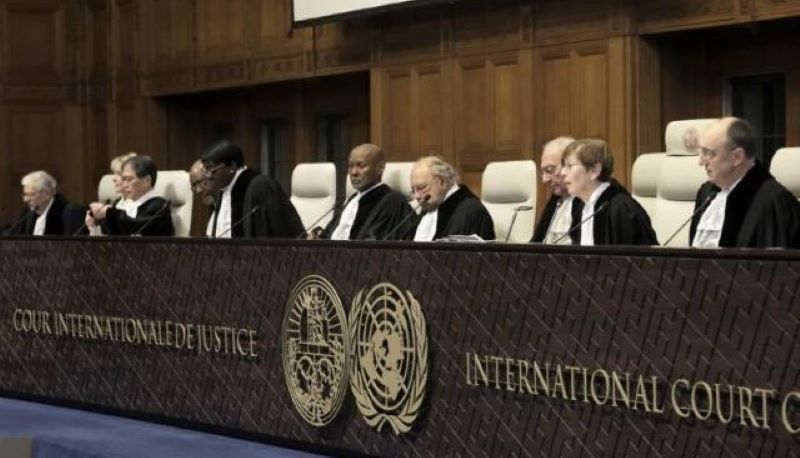
THE HAGUE: The International Court of Justice will deliver its judgment on November 19 in a landmark case examining whether Myanmar violated the United Nations Genocide Convention in its treatment of the Rohingya Muslim minority, according to Anadolu.
The ruling will be read at 10am local time in The Hague, Netherlands. The case was brought by Gambia in 2019 and has drawn interventions from 11 other states, reflecting the international weight attached to allegations against Myanmar.
Gambia accuses Myanmar of breaching its obligations under the 1948 Convention on the Prevention and Punishment of the Crime of Genocide during military operations against the Rohingya. The case was filed before the UN’s highest court after members of the Rohingya community welcomed Gambia’s decision as a “historic achievement.”
The Rohingya are a stateless Muslim minority who have endured decades of discrimination, restrictions and displacement in Myanmar. Their plight became a global concern in August 2017, when more than 700,000 people fled Rakhine State following a military crackdown. Most crossed into neighbouring Bangladesh, joining vast refugee camps where many remain today.
The United Nations has described the Rohingya as the world’s most persecuted minority. A report by the Ontario International Development Agency estimated that thousands were killed by Myanmar’s security forces during the violence.
For survivors, the court’s decision represents more than a legal ruling. It is a rare moment of international recognition for a community that has spent years seeking accountability for killings, destruction and forced expulsion. Many Rohingya families still carry the memory of villages burned, relatives lost and journeys made under threat.
The ICJ’s judgment will determine whether Myanmar is legally responsible for genocide under international law. Whatever the outcome, the case has already placed Myanmar’s conduct before the world’s principal judicial forum and tested the reach of the Genocide Convention.
The ruling is expected to have consequences beyond the courtroom, shaping diplomatic pressure, humanitarian policy and the long-running debate over justice for one of the world’s most persecuted peoples.