Refugees Without Representation – The Political Crisis Haunting Azad Kashmir
By Sardar Shaukat Ali Kashmiri
A fresh and contentious debate has erupted inside the legislative assembly of Azad Jammu and Kashmir over a question that sounds, on the surface, like a simple matter of electoral procedure, reserved seats and political representation for Jammu and Kashmir’s refugees. But beneath this surface runs something far deeper: a question tied to the historical unity, geographic identity, and political future of the state of Jammu and Kashmir.
What makes this moment particularly troubling is that such a weighty, emotionally charged subject, one carrying decades of suffering, forced displacement, and unresolved international dispute, is not being met with serious, thoughtful dialogue. Instead, it is being fuelled by sloganeering, fatwas, emotionalism, and the dangerous promotion of social division.
It is astonishing, and deeply concerning, that the circles opposing refugee representation either remain deliberately ignorant of the political and historical sensitivity of this issue, or are consciously pursuing narrow, short term goals under the guise of “locals versus migrants.”
The Historical Truth
The historical and undeniable reality is this; before August 15, 1947, the entire state of Jammu and Kashmir; encompassing Jammu, the Kashmir Valley, Ladakh, Gilgit-Baltistan, and present-day Azad Kashmir was a single, indivisible political and geographic unit. It could not be divided.
The partition of the Indian subcontinent, followed by regional wars, international political interests, and the disasters that came with them, forcibly split this region into different parts. That forced partition did not merely redraw geographical lines, it uprooted millions of human beings from their ancestral lands, drove them far from their homes, stripped them of economic security, and plunged them into a permanent, ongoing identity crisis.
The refugees of Jammu and Kashmir are not the product of one specific era or a single tragic event. Behind their displacement lies a long and bloody political chain of events:
- 1947: At the time of partition, millions of Kashmiris from Jammu and other regions were forced to flee through organised violence, taking refuge in various districts of Pakistan and Azad Kashmir.
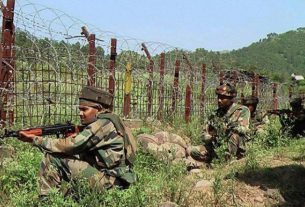
- 1965 and 1971: The Pakistan-India wars created new ceasefire lines and working boundaries; today’s Line of Control and fresh waves of displacement particularly from border areas such as Punch, Chamb, and the security zones of Jammu.
- 1989: The armed insurgency that erupted in the Kashmir Valley forced tens of thousands of families to cross the Line of Control and seek shelter in Azad Kashmir’s refugee camps. This security and political crisis has never fully settled.
The Fundamental Question
This raises a principled and urgent question: does any citizen who has been forced to relocate within their own state under conditions of compulsion and crisis automatically lose their basic state identity and their right to vote?
Under United Nations resolutions and international law, Jammu and Kashmir remains a disputed and unresolved entity to this day. If that is so, then every resident of this state, whether living anywhere in the world or in any city of Pakistan, must have the full right to participate and vote in its political system.
The Constitutional Framework
A review of Azad Kashmir’s constitutional structure reveals the following: the Azad Jammu and Kashmir Act of 1970, and the interim constitution of 1974 that followed, allocated 12 special seats in the legislative assembly; 6 for Jammu refugees and 6 for Valley refugees for Kashmiris settled across Pakistan. The fundamental purpose of this arrangement was clear: until a final decision on the full state was reached, Kashmiri refugees living in Pakistan would maintain their bond with the state of Jammu and Kashmir and its legislative assembly.
To demand the elimination of those seats, or to oppose them, is in practical terms to accept the permanent partition of the state to treat an ongoing injustice as a settled fact.
We firmly believe that the number of assembly seats allocated for Jammu and Kashmir refugees should be proportional to their actual population within Azad Kashmir’s constituencies, a just and democratic arrangement that would reflect genuine representation.
A Violation of Human Rights
Demanding the abolition of refugee representation directly conflicts with international human rights declarations and the fundamental principles of international law. It is also a blatant contradiction: citizens of Jammu and Kashmir who hold “state subject” status are being denied representation in the Azad Kashmir assembly, and the demand to strip them of their existing rights is, in reality, a dangerous and covert blueprint for the permanent partition of Jammu and Kashmir.
Under this scheme, the people of Jammu and Kashmir would be divided along religious, regional, linguistic, tribal, and political lines, with walls of hatred and enmity deliberately constructed between them, so that they might reach the point where they can no longer even imagine living together as one people.
We regard all holders of Jammu and Kashmir state subject status as equal inheritors of the shared historical legacy of this state, regardless of race, colour, religion, belief, language, region, tribe, gender, or ideology.
The Human Reality on the Ground
Azad Kashmir’s population stands at approximately 4.5 million. Due to a lack of industry and employment opportunities, nearly forty percent of its total population is compelled to work abroad as migrant labourers. These overseas Kashmiris support their families back home relatives and loved ones still living in Azad Kashmir, providing financial assistance in every possible way, keeping alive the thread of connection to their homeland. They are exiles from home, yet they send billions of dollars every year back to their land for housing, food, quality education, and medical care.
And yet today, the very same people who once left their homeland are being targeted by political elements who are opposing the refugee assembly seats. These elements could also make the same argument against second and third-generation Kashmiris now permanently settled in Britain and other Western countries, that they too should be denied the right to vote, and that their property rights in Azad Kashmir should be stripped away.
The Real Agenda
The real issue is that certain political circles have already surrendered, intellectually, to the idea of permanent partition. They therefore regard refugee representation as unnecessary and burdensome. But those who still believe in the historical unity of Jammu and Kashmir, and in a shared Kashmiri identity, understand that this representation is not merely about a few electoral seats or political interests, it is the shared dream of a nation seeking its continuity, reunification, or self-determination; a dream that is watched from both sides of the Line of Control.
A Crisis of Governance, Not of Refugees
The existing political, economic, and administrative problems of Azad Kashmir unemployment, unfair distribution of resources, lack of good governance must not be dumped entirely on the refugees. That is not only historically unjust, it is severe political betrayal.
Azad Kashmir’s fundamental problems are rooted in Pakistan’s federal policies, the ambiguous division of powers between Islamabad and Muzaffarabad, and the inadequacy of local governance. It is exactly the same with Gilgit-Baltistan constitutional deprivations and the brutalities of India’s administrative machine in Indian-administered Kashmir are equally real and equally damaging.
The truth is that throughout the past three quarters of a century, the ordinary Kashmiri people, on both sides of the Line of Control, have always paid the heaviest price for the self-serving policies of larger state powers and the shameful behaviour of local ruling elites from both South Asia’s major nations.
A Call for Unity
Now is the time to demand something different. We must, as a people, rise above manufactured divisions, regional and linguistic biases, artificial prejudices, and politics of hatred and collectively recognise our true and fundamental problems.
The current wave of “locals versus migrants” rhetoric is, in reality, a calculated move designed to divert the public’s attention away from their genuine political and economic rights and the real questions of statehood.
Furthermore, general elections in Azad Kashmir are expected soon, and certain elements appear to have a plan to spread bloodshed and anarchy in the region beforehand. Wisdom and reason demand that such elements be watched with a careful eye, and that their morale be decisively broken.
God forbid, if conditions in Azad Kashmir deteriorate further, it would not be unlikely that the entire political and constitutional system would simply be dissolved. There are countless weaknesses and flaws in the existing system, urgent, fundamental reforms are needed. But we must remember: it is under this very system that our High Court, Supreme Court, administrative courts, and all other state institutions continue to function.
If things reach the point where the system is dissolved and some retired military officer, judge, or bureaucrat is appointed as an overseer, then where would ordinary people go to seek justice and resolve their problems? Today, at least, they can go to the nearest Deputy Commissioner, the SHO, or the local magistrate. After that — to whom?
The Way Forward
From 1947 to this day, whatever rights the people of Azad Kashmir have managed to secure, they have done so painstakingly through long, hard struggle. That is why the path to our real destination lies only through peaceful agitation, negotiation, and mutual unity.
The people of Azad Kashmir, at this delicate juncture, cannot and must not become a tool for any kind of adventurism or anarchy.
In movements for public rights, the protection of people’s lives, their property, and their dignity and honour must be the very first priority. The discouragement of anarchist, violent thinking and the resolute resistance to demoralising forces, is the collective obligation of all of us.
Kashmir and Jammu are one region, one identity, and one democratic right. Until this is recognised politically, the question of the stolen, unjust state will continue to haunt us.
When will that day come? That is the only question, the future will answer it. The direction must be taken not through strategic compulsion, division, or uncertainty, but through unity in our ranks, a stable and resilient public, a firm belief in self-determination, and by creating a hopeful atmosphere of internal solidarity.
Writer is the Exiled Chairperson of the United Kashmir Peoples National Party, based in Bern, Switzerland