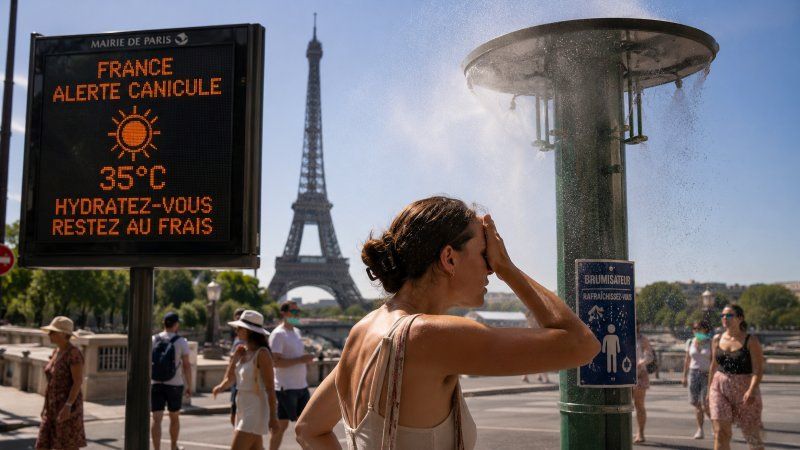
A powerful heatwave sweeping across Europe has pushed temperatures to record highs, triggered widespread power outages, and raised growing concerns over public safety and climate resilience, according to BBC News.
In France, tens of thousands of homes were left without electricity in western regions as extreme heat strained infrastructure. Authorities said power restoration could take time, as the country braced for the hottest day of the current heatwave. Temperatures have already surged beyond 44°C in some areas, marking one of the most intense heat events in the nation’s history.
Weather agencies warned that large parts of France remain under the highest level of heat alert, with dangerously high temperatures expected to persist for several days. Nights have offered little relief, with unusually warm conditions adding to the stress on people, especially the elderly and vulnerable.
The heatwave has not been limited to France. Across Western and Central Europe, countries including the United Kingdom, Germany, Belgium, and the Netherlands are facing rising temperatures and escalating warnings. In some regions, temperatures are forecast to approach or exceed 40°C in the coming days.
Emergency services across Europe have reported a rise in heat-related incidents, including multiple drownings as people seek relief in rivers and lakes. Officials are urging caution, warning that extreme heat can increase risks even in seemingly safe environments.
The prolonged heat has also heightened the threat of wildfires and drought. Firefighters in parts of France recently battled a major forest blaze, while authorities in several European regions have urged residents to conserve water. Some cities have introduced restrictions on activities such as outdoor fires to reduce risks.
Major tourist landmarks have also been affected. In Paris, both the Louvre Museum and the Eiffel Tower shortened visiting hours due to safety concerns, as historic structures struggle to cope with sustained high temperatures and large crowds.
Experts say the intensity and frequency of such heatwaves reflect a broader pattern linked to climate change. Officials warn that societies may need to adapt quickly to what is becoming a new normal of extreme summer conditions.
While some relief is expected later in the week, it may come with thunderstorms, raising the risk of flash floods and further disruption. For now, much of Europe remains on alert as the heatwave continues to test infrastructure, public health systems, and daily life.