

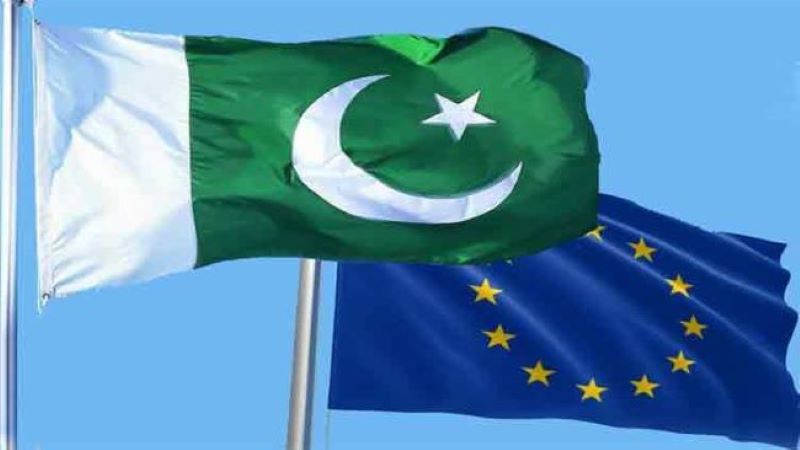
The European Union has cautioned Pakistan that it must demonstrate stronger, more visible progress on human rights, labour protections, governance and other international commitments as Brussels prepares for a decisive review of the country’s GSP+ trade privileges, according to Dawn News.
EU Ambassador to Pakistan Raimundas Karoblis, speaking in an interview with DawnNewsTV on Wednesday, said bluntly that Islamabad “needs to do more” to meet the obligations tied to the preferential trade scheme, which grants duty-free or reduced-duty access to most Pakistani exports. The upcoming monitoring mission, postponed from June due to the Iran-Israel conflict, will examine Pakistan’s adherence to 27 UN conventions that underpin GSP+.
Karoblis said the mission will engage government institutions, civil society, human-rights defenders and private-sector workers before issuing a report that will play a central role in determining Pakistan’s future in the next GSP+ cycle beginning in 2027. “Implementation is really important,” he stressed, noting persistent EU concerns over human rights, the death penalty, blasphemy laws, forced disappearances, minority protections, women’s rights and child and forced labour.
Forced disappearances, in particular, remain a priority issue for Brussels. While Pakistan has established investigative bodies, Karoblis said the EU will closely assess whether those measures are effective and sufficient.
Asked about Pakistan’s controversial 27th Constitutional Amendment, he called it an internal matter but noted that the EU holds “different views” regarding judicial independence. He added that questions will also be raised about the recent use of military courts to try civilians.
Karoblis’ remarks echo a series of warnings from senior EU officials. Former ambassador Riina Kionka said in August that Pakistan must show “credible and visible progress,” citing a “clear degradation” in the rights environment observed by monitors. In January, EU human-rights envoy Olof Skoog urged Pakistan not to assume the continuation of GSP+ status, pressing the government to avoid military trials and restrictions on free expression.
While the EU acknowledges some progress, Brussels has made clear that future trade benefits will hinge on concrete, measurable reforms, particularly in the rights sector, where Pakistan faces its toughest scrutiny.





