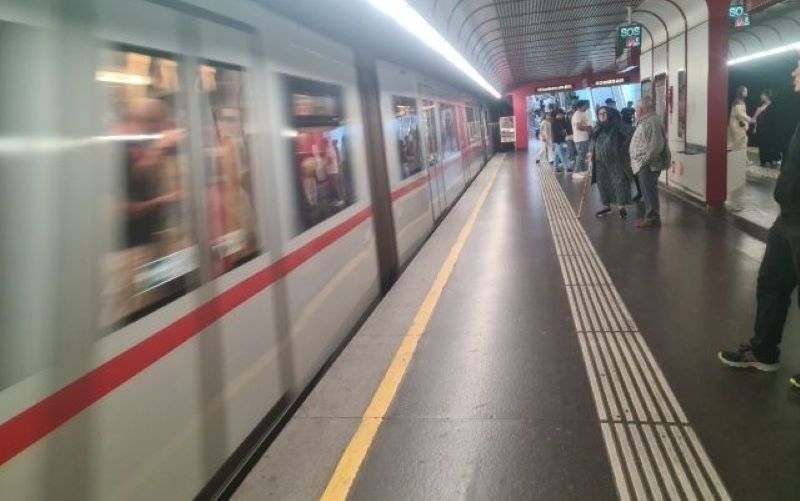
A veterinary student in Vienna has won a discrimination case against the city’s public transport operator, Wiener Linien, after being forced to pay double for her semester ticket simply because her official residence was listed outside the capital, reported by “Heute”.
From 2021 to 2023, the student, though living in Vienna during the academic year, was charged €150 per semester for her travel pass—while students with a registered primary residence in Vienna paid only €75. The difference: her main address remained in another federal state, where she lived with her mother on weekends and holidays.
Initially, her complaint was dismissed by the District Court of Vienna’s Inner City. But on appeal, the Higher Regional Court for Civil Law ruled in her favor, finding the price discrimination unconstitutional.
A Matter of Residence
Born in Vienna, the student had moved to another province at the age of one. When she returned to the city in 2021 to study veterinary medicine, she maintained a small apartment as her secondary residence but kept her main registration elsewhere. The arrangement, though financially beneficial—earning her an additional €100 to €200 in student aid—classified her as a non-local student in the eyes of Wiener Linien.
That distinction proved costly. Over three semesters, she paid €225 more than her Viennese counterparts. She took the matter to court, assigning her claim to a litigation financier, who argued the fare structure violated Austria’s constitutional guarantee of equal treatment.
The appellate court agreed: “A price difference for public transportation based solely on a customer’s primary residence lacks any objective justification,” the ruling declared. “Such unequal treatment contradicts the principle of equality.”
A Broader Impact
The judgment is final. Wiener Linien must now reimburse the student €225 plus interest, doubling the amount to €450, and cover roughly €1,240 in legal fees.
But the implications extend far beyond a single case. The litigation financier runs a website, ticketerstattung.at, inviting students who paid the higher fare to join a collective action. Claims can be made retroactively for up to three years, and more than 17,000 students have already registered.
Still, Wiener Linien insists the matter is not settled. “Among the panels of the Civil Court, there seems to be no consensus on whether this constitutes a violation of equality,” the company told Die Presse. In a separate ruling, another panel found no breach of the constitutional principle.
Yet the transport operator has already acted. Beginning in the summer semester of 2023, Wiener Linien abolished the residence-based pricing system. All students, regardless of where they live, now pay the same price for a semester ticket.