Austria’s Coalition Struggles to Finalize Key Budget Reform Package
VIENNA — Austria’s three-party governing coalition remained at odds on Monday over a draft budget reform package, raising doubts about whether the government can complete the normal consultation process before the legislation reaches the Cabinet later this week, reported by ORF News.
The proposed budget accompanying law, a broad collection of measures intended to help restore the country’s public finances, had still not received the approval of all coalition partners by Monday afternoon. The continued disagreement has left officials with little time to finalize the draft before Wednesday, when the Cabinet is expected to approve both the legislation and Austria’s federal budget for 2027 and 2028.
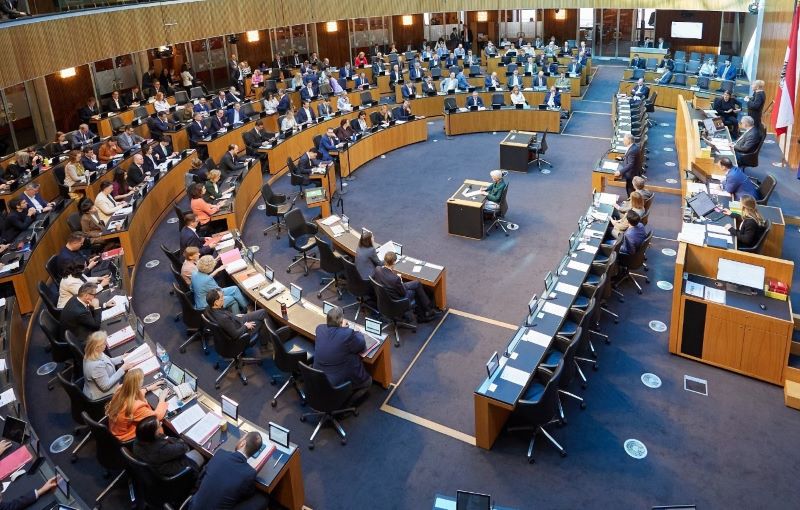
Once approved, the proposals will be forwarded to the National Council, the lower house of Parliament, where they will undergo further debate and scrutiny. Given the tight schedule, policymakers are increasingly considering an alternative review process through a parliamentary committee rather than the standard public consultation period. Such a procedure, though used less frequently, would still allow experts, interest groups, and other stakeholders to submit feedback before lawmakers take a final vote.
Government officials nevertheless remained optimistic that a consultation draft could still be completed in time.
The main sticking points in negotiations appear to be plans to reduce non-wage labor costs and measures aimed at preventing workers from temporarily registering with Austria’s Public Employment Service (AMS) between jobs, a practice critics say places an unnecessary burden on public resources.
Several other contentious issues seem to have moved closer to resolution. Disagreements over financing replacements for Austria’s aging Eurofighter fleet have reportedly been eased through a political commitment among coalition partners. Likewise, a dispute linked to reforms of judicial leadership structures, an issue strongly championed by the liberal NEOS party, is no longer viewed as a significant obstacle.
With the Cabinet meeting approaching and pressure mounting to address fiscal challenges, coalition leaders face an increasingly urgent task: finding common ground and presenting a unified strategy for Austria’s economic future.