

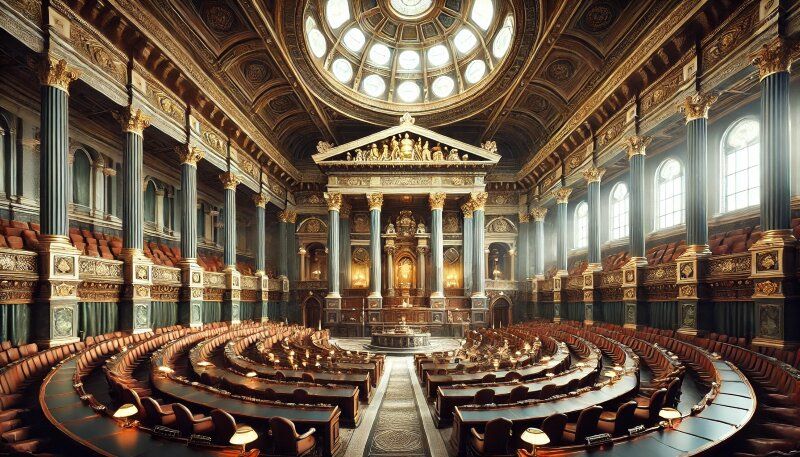
VIENNA: Austria’s newly formed coalition government—comprising the ÖVP, SPÖ, and Neos—introduced itself to Parliament on Friday, stepping into the political spotlight with a mix of optimism, determination, and sharp criticism from the opposition. The government benches are noticeably tighter, with slimmer seats making room for the expanded coalition. The session was marked by handshakes and formalities, attended by President Alexander Van der Bellen and former high-ranking officials.
Chancellor Christian Stocker of the ÖVP began his address by acknowledging the lengthy and challenging negotiations that led to this three-party coalition. He emphasized the need for unity, drawing inspiration from past political alliances and urging the country to embrace optimism. “We must learn from history,” he said, calling for an end to division—whether between left and right or young and old. Stocker stressed that Austria must work together for the common good and avoid political infighting. He also highlighted key policies, such as stopping family reunifications for migrants, implementing a second mandatory kindergarten year, and focusing on pragmatic climate policies. “This government will keep Austria a reliable partner in the free world,” he declared, affirming his belief in a prosperous future.
Vice Chancellor Andreas Babler of the SPÖ echoed the theme of compromise, insisting that the coalition prioritized national interest over political ego. “This coalition is a symbol of putting the country before selfish ambitions,” he stated, reinforcing his commitment to democracy. Babler warned against the rise of far-right politics, accusing the opposition FPÖ of threatening democratic stability. He emphasized economic fairness, particularly through increased taxes on banks, and underscored the government’s commitment to rent control, gender-based violence prevention, and stricter immigration policies. With a determined tone, Babler called on all Austrians to “roll up their sleeves” and help push the economy forward. His speech also included a passionate defense of Austria’s public broadcaster, ORF, likening it to cultural icons like Sachertorte and Wiener Schnitzel.
Foreign Minister Beate Meinl-Reisinger of the Neos reinforced the coalition’s pro-European stance, stressing Austria’s role in global diplomacy. She acknowledged the fiscal challenges ahead but maintained that the government was prepared for bold reforms rather than settling for the “smallest common denominator.” She emphasized the need for immediate action on education and integration, warning against fear-driven politics. “We are a strong, confident nation,” she declared, reaffirming Austria’s commitment to supporting Ukraine and maintaining stability in Europe.
However, not everyone shared the government’s enthusiasm. FPÖ leader Herbert Kickl fiercely attacked the coalition, calling it “the most expensive and least effective government in history.” He labeled the alliance a “monster of stagnation” and accused its leaders of forming a coalition out of fear rather than responsibility. Kickl dismissed their policies as empty promises and vowed relentless opposition. He insisted that real change would come when his party took power, declaring, “The people’s chancellorship is coming—if not now, then soon.”
Meanwhile, Green Party leader Werner Kogler adopted a more measured tone. While acknowledging the coalition’s efforts, he criticized the lack of strong environmental policies, warning against budget cuts that could harm climate initiatives. Despite differences, he expressed willingness to collaborate when necessary.
As Austria embarks on this new political chapter, the road ahead promises both cooperation and conflict, with optimism battling skepticism in a deeply divided landscape.





