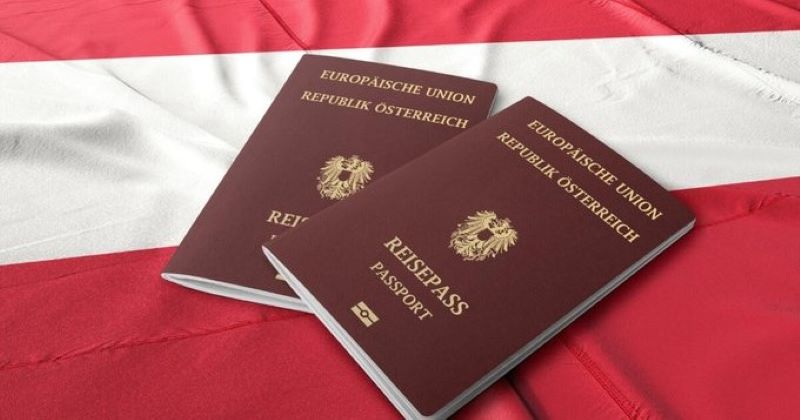
Austria’s government has firmly rejected calls to grant automatic citizenship to babies born to foreign parents, pushing back against proposals that link nationality to birthplace amid a sharp rise in the number of newborns without Austrian citizenship, reported by Heute.
According to Statistics Austria, 40.5 percent of babies born in Vienna in 2024 did not hold Austrian citizenship; a figure that has doubled over the past two decades. In 2004, the share stood at about 20 percent, underscoring how rapidly the country’s demographic landscape has changed.
The figures have reignited a national debate on integration, political participation and democratic legitimacy. Migration researcher Judith Kohlenberger of the Vienna University of Economics and Business recently argued that Austria should move toward a model that grants citizenship at birth when parents have lived in the country for many years, are employed and pay taxes.
Kohlenberger warned that democracy itself could be weakened if large segments of the population remain excluded from voting rights. In some urban districts, she noted, more than half of residents of voting age are unable to vote because they do not hold an Austrian passport.
The government, however, has drawn a clear line. Integration Minister Claudia Plakolm of the conservative Austrian People’s Party (ÖVP) dismissed the idea of automatic citizenship, stressing that nationality must be earned, not granted by default.
“Citizenship is and will never be automatic,” Plakolm said in an interview with the daily Heute. “Austrian citizenship can only be the final step of successful integration.”
She emphasized that applicants must demonstrate strong German language skills, respect Austria’s values and laws, and contribute to society through work and civic engagement. These principles, she said, are reflected in the coalition government’s program, which aims to further tighten citizenship requirements, particularly in language proficiency and commitment to social norms.
Plakolm rejected claims that current policies pose a threat to democracy. Responsibility, she argued, lies with parents to apply for citizenship for their children if they intend to settle permanently in Austria. She noted that children benefit from a simplified and significantly cheaper application process.
Accepting Austrian citizenship, she added, is a life decision that comes with both rights and obligations. “If someone chooses not to take that step,” Plakolm said, “they must accept that they cannot vote here.”
Those who feel a stronger attachment elsewhere, she concluded, are free to exercise their political rights in another country; but not in Austria.