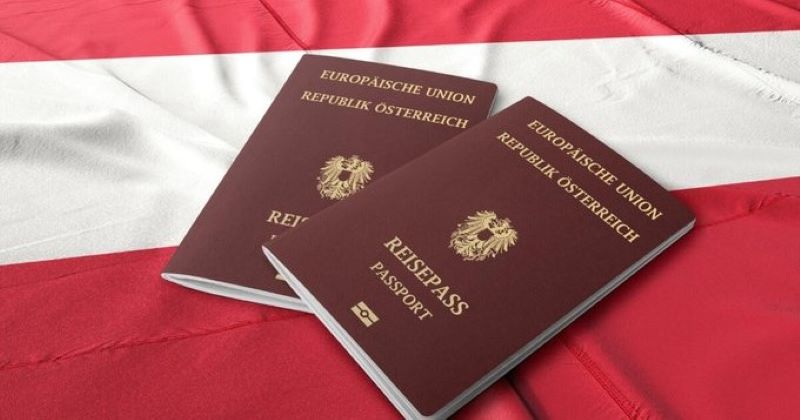
LONDON/VIENNA — A serious passport scandal has emerged at Austria’s embassy in London, where 79 travel documents were unlawfully issued to 39 people who did not have Austrian citizenship.
Foreign Minister Beate Meinl-Reisinger (NEOS) revealed the figures while answering a parliamentary inquiry. She said the documents were issued illegally because the recipients did not meet the basic legal requirement of Austrian citizenship. All of the documents have since been declared invalid and withdrawn.
It is still unclear whether all 79 documents were passports. The Foreign Ministry has declined to provide further details, saying that the information could affect ongoing investigations by Austria’s Federal Bureau for Preventing and Combating Corruption (BAK), as reported by the oe24.
The case has raised serious questions about security and supervision at the embassy. Green Party foreign-policy spokeswoman Meri Disoski, who submitted the inquiry, said that 79 illegally issued travel documents for 39 people were “no small matter”. She demanded answers about who received the documents, how they were used and whether money was paid for them.
The government also confirmed that the employee suspected of involvement is no longer working for the Foreign Ministry. However, investigators are still trying to establish exactly what happened.
The scandal first came to light in April, when the Austrian embassy in London alerted the Foreign Ministry on April 23. The warning followed a request from Vienna’s Municipal Department for Immigration and Citizenship (MA 35) to verify a passport issued by the embassy. Officials could not find the normal records and documentation that should have supported its issuance.
Internal investigations were launched immediately, and the BAK and the responsible public prosecutor’s office were informed.
The discovery has also exposed possible weaknesses in Austria’s internal control system. Procedures such as the “four-eyes principle”, which requires important actions to be checked by more than one employee, were apparently bypassed through the misuse of the embassy’s IT system, according to Meinl-Reisinger.
The exact method remains under investigation. The Foreign Ministry is now working with the Interior Ministry to strengthen the relevant IT systems and prevent similar incidents in the future.
Since April 24, relevant employees at the London embassy have been subject to official reviews. Authorities have also inspected five other Austrian locations that issue large numbers of passports. No irregularities were found at those sites, according to the Foreign Minister.
For Austria, however, the London case remains a troubling reminder that even carefully designed controls can fail. What began with a single passport that could not be properly verified has grown into a wider investigation involving dozens of unlawful documents and uncomfortable questions about how they were issued.