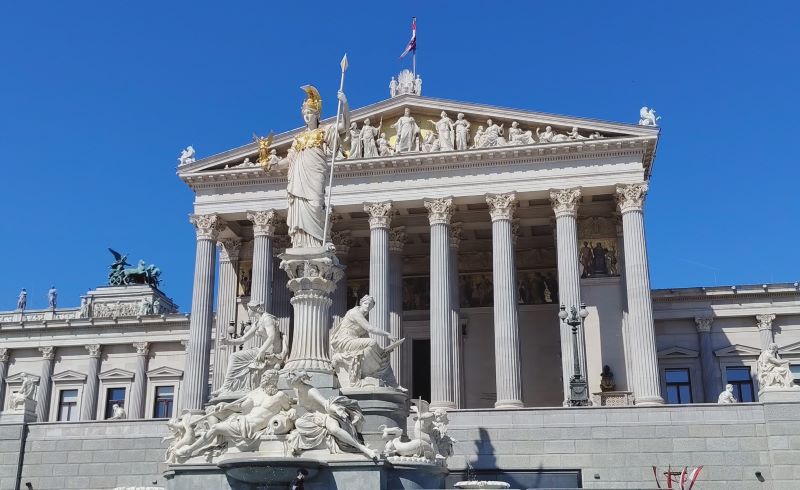
Austria’s National Council will meet for five consecutive working days next week, an unusual schedule not seen since 1993. Lawmakers must complete a packed agenda before approving the country’s double budget on Friday, after which they can begin their summer break, according to Austria Press Agency.
The week is split into two phases. Monday and Tuesday will focus on a wide range of legislative proposals, while Wednesday to Friday will be dedicated to debating and passing the national budget and related laws.
Among the planned changes is an extension of vehicle inspection intervals. Cars will now require their first inspection four years after registration instead of three, with longer gaps in later years as well. Existing benefits for displaced Ukrainians in the transport sector will also be removed.
Education reforms are expected to spark debate. Two new subjects “Media and Democracy” and “Computer Science and Artificial Intelligence” will be introduced in upper secondary schools. To make room, two hours of a second foreign language or Latin will be cut, a move that has already triggered protests.
Other measures include shortening the initial training phase for specialist doctors from nine to six months starting in August, in response to long waiting times. Single-use e-cigarettes will be banned by the end of the year, and stricter fines will be imposed for littering cigarette butts on playgrounds.
Consumer protection rules will also be strengthened. Manufacturers of products such as smartphones and washing machines will be required to offer free or reasonably priced repairs. Online and phone contracts must include a clear cancellation option, and the deliberate design of products with limited lifespans will be banned.
From Wednesday, attention shifts to the budget. Planned measures include a 2.95 percent pension increase, cuts to payroll related family contributions starting in 2028, and higher corporate taxes on large profits. New taxes on packages and alcohol are also planned, while some social benefits will not be adjusted for inflation.
The government aims to reduce the budget deficit to 3.5 percent of GDP by 2027 and back within the EU limit of 3 percent by 2028.