Arab World Warns Iran to Halt Attacks as Trump Urges Restraint and War Clouds Thicken
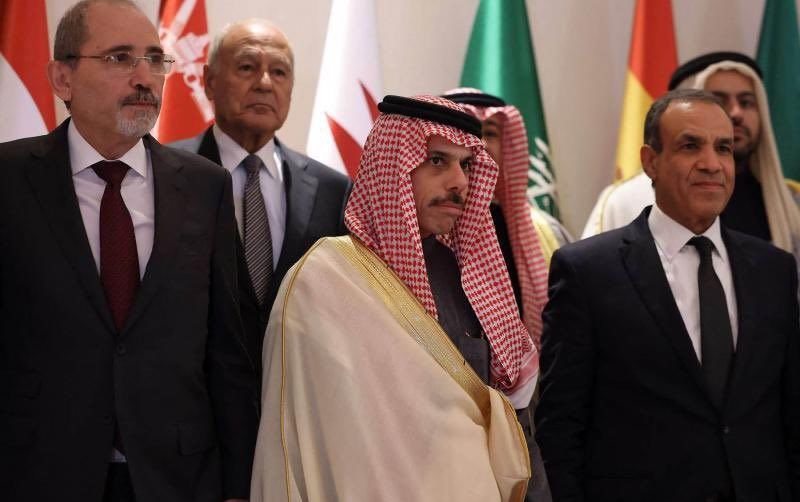
Tensions in the Middle East are escalating sharply as Arab nations unite to demand that Iran stop its missile and drone strikes across the region, according to The Nation. Meeting in Riyadh, ministers from Saudi Arabia, the United Arab Emirates, Qatar, Egypt, Jordan, Turkey, and others condemned what they called “deliberate” Iranian attacks on civilians and vital infrastructure from oil facilities to airports and embassies.
Their joint statement declared that Tehran’s actions “cannot be justified under any pretext” and warned that countries have every right to defend themselves, citing the United Nations Charter. The ministers insisted that future relations with Iran will depend on its willingness to respect sovereignty and end support for armed militias that destabilize neighboring countries. They also warned against any threat to global trade routes through the Strait of Hormuz or the Bab al-Mandab Strait, two chokepoints essential for world energy supply.
Saudi Foreign Minister Prince Faisal bin Farhan Al Saud told CNN that his country “will not shy away” from protecting its people and economy, even if that means striking back. “If deemed necessary, we will act,” he said, accusing Iran of targeting “the livelihoods of ordinary Saudis” through attacks on oil and gas facilities.
His anger echoed across the Gulf as several nations, including Kuwait and Bahrain, reported attempted drone strikes. One drone hit Saudi Arabia’s Yanbu refinery, sparking a fire that was later contained. “What military purpose can there possibly be in attacking a refinery?” Prince Faisal asked. “Iran has turned away from diplomacy, it uses pressure, not dialogue.”
Meanwhile, Israel confirmed that an Iranian missile struck the Haifa oil refinery complex, igniting a massive blaze. The Bazan Group, one of Israel’s largest energy firms, said emergency teams were still working to control the fire and check for chemical hazards.
In Washington, U.S. Central Command reported that an American F-35 jet was forced to make an emergency landing while flying a combat mission over Iran after being hit by enemy fire. The pilot survived, and the incident is under investigation.
Despite mounting violence, President Donald Trump told reporters he is not planning to send U.S. troops to Tehran or elsewhere in the region. “No, I’m not putting troops anywhere,” he said, adding that he has advised Israeli Prime Minister Benjamin Netanyahu to refrain from striking Iranian energy sites. “I told him, don’t do that and he won’t.”
Still, Netanyahu defended Israel’s military campaign, saying Iran “can no longer enrich uranium or make ballistic missiles” after recent attacks on its infrastructure. He admitted that air campaigns alone cannot bring change inside Iran: “You can’t do a revolution from the air,” he said, hinting that other, undisclosed options were being explored.
At the Pentagon, U.S. Defense Secretary Pete Hegseth said there’s “no definitive time frame” for ending the war. “It takes money to kill bad guys,” he bluntly remarked while confirming the request for additional funding from Congress.
Iran’s Foreign Minister Abbas Araghchi responded defiantly, warning of “zero restraint” if Iranian energy sites are hit again. “Our last response showed only a fraction of our power,” he said on X.
At the United Nations, Secretary‑General António Guterres urged all sides to stop before the conflict spins “out of control.” Speaking from Brussels, he said simply, “To the United States and Israel: It’s high time to end this war. To Iran: stop attacking your neighbors.”