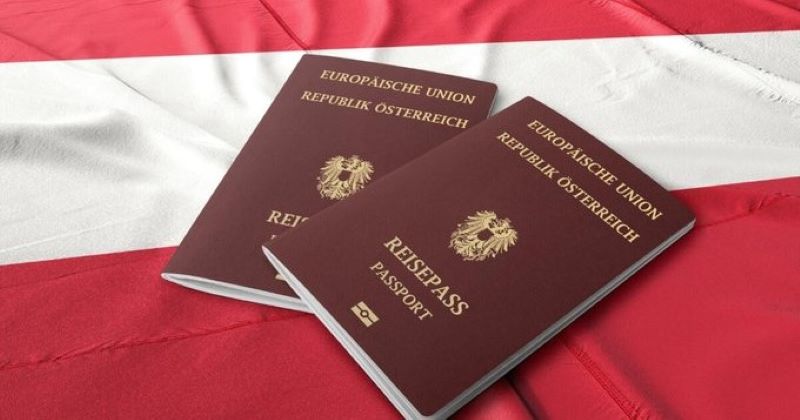
A sharp political dispute over Austrian citizenship has reignited a familiar national question: who truly belongs in Austria, and what should a person have to prove before receiving its passport?
The controversy grew after President Alexander Van der Bellen called, on National Day, for easier access to citizenship for children born in Austria. His words struck a nerve. Green politician Alma Zadić backed him, calling the existing rules “completely outdated.” For many critics, the current system asks people who have grown up, studied, worked, and built lives in Austria to remain outsiders on paper, according to Heute.
But the governing ÖVP has drawn a firm line. Chancellor Christian Stocker rejected any relaxation, insisting that there would be “no devaluation of Austrian citizenship” under his leadership. Integration Minister Claudia Bauer echoed that concern, warning that easier citizenship could create a “magnet effect” and attract further immigration.
The debate has gained momentum through the petition “Ein Pass, der passt!”, “A Passport That Fits.” Its supporters want a simpler route to citizenship, particularly for people whose lives are already rooted in Austria. They argue that nationality should reflect reality, not merely paperwork.
Yet Austrian citizenship is not granted simply because someone is born in the country. Applicants generally must show knowledge of Austria’s democratic order, national history, and the history of their own federal state. The official citizenship test contains 18 multiple-choice questions, with six questions in each of the three subject areas. Each question offers four answers, and more than one may be correct.bmeia.
The examination is designed to test more than memorised facts. It asks whether applicants understand the principles behind Austrian democracy: human dignity, the rule of law, fundamental rights, political participation, and the country’s place in the European Union. It also covers Austrian history, including the Habsburg era, the First Republic, National Socialism, the Second World War, and the modern Second Republic.
To pass, a candidate must earn at least three points in each subject area, or at least 12 of the 18 possible points overall. The test is free, and official study materials are provided to applicants.
For supporters of reform, the test is a fair requirement; the problem lies in the wider citizenship rules. For opponents, any easing would weaken the value of the Austrian passport. Between those positions lies a deeper question: should belonging be measured by birth, residence, knowledge, or something no examination can fully capture?