Japan’s government firmly denied on Monday that it had promised to send naval support to the Strait of Hormuz, countering U.S. claims that Tokyo had agreed to deploy defense forces in the region, according to Arab News.
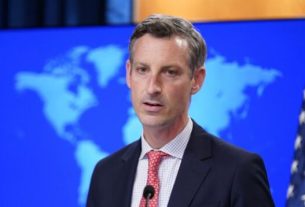
Chief Cabinet Secretary Kihara Minoru told reporters that Japan had made “no specific promises” about dispatching ships, Self-Defense Forces, or minesweepers to the vital waterway connecting the Persian Gulf with the Arabian Sea. His comments came after U.S. Ambassador to the United Nations Mike Waltz said during a television interview that Japanese Prime Minister Takaichi Sanae had “promised support by the Maritime Self-Defense Force.”
The controversy stems from discussions at the Japan-U.S. summit held on March 19, where President Donald Trump reportedly asked Japan and several other allied nations to help maintain safe navigation in the Strait of Hormuz. The narrow passage is one of the world’s most important energy trade routes, with much of Japan’s oil supply passing through it.
Prime Minister Takaichi acknowledged the significance of securing safe navigation but emphasized that Japan must act within the boundaries of its peace-oriented constitution and laws. “There are things that can and cannot be done within the scope of Japanese law,” she reportedly told aides after the meeting.
Kihara reinforced this position, saying that while ensuring maritime safety in the region is “critically important,” no concrete decisions or actions have been taken. He noted that Japan continues to monitor the situation closely and will make judgments based on its national interests and legal framework.
The statement reflects Japan’s careful balancing act: maintaining its close alliance with the United States while upholding its constitutional limits on military involvement abroad, a principle that has guided the nation’s defense policy since the end of World War II.