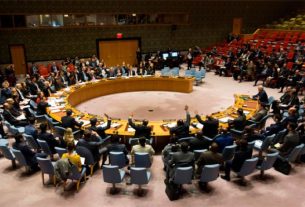
New York — The world is spending more than ever on weapons, but the United Nations warns the price is peace itself, according.
In a landmark report released this week, the UN revealed that global military expenditures soared to $2.7 trillion in 2024, a record high and a 9 percent jump from the previous year — the sharpest surge since the Cold War, reported by “The Friday Times”. It marked the tenth consecutive year of growth, driven by mounting conflicts, geopolitical rivalries, and swelling defense budgets across every region.
If left unchecked, the report projects global military spending could reach between $4.7 trillion and $6.6 trillion by 2035 — nearly five times Cold War levels.
UN Secretary-General António Guterres issued a stark warning. “A more secure world begins by investing at least as much in fighting poverty as we do in fighting wars,” he said, urging governments to redirect even a fraction of their defense budgets. According to the report, $93 billion a year — less than 4 percent of current spending — could end global hunger. Just 10 percent could fully vaccinate every child.
Izumi Nakamitsu, the UN’s disarmament chief, called for a “human-centered” vision of security. “The military alone is not going to produce security,” she said, emphasizing transparency, dialogue, and disarmament. She also noted that nuclear powers remain locked in a “qualitative arms race” that threatens to escalate further.
The report stresses that rising defense budgets come at the expense of the Sustainable Development Goals (SDGs), siphoning resources from education, healthcare, renewable energy, and poverty eradication. Xu Haoliang, acting head of the UN Development Programme, noted that in 2024, military spending was 13 times greater than development spending.
“Development is itself a driver of security,” Xu said. “Investing in people builds more peaceful, resilient societies.”
The UN’s message is clear: true security will not come from arms races, but from rebalancing priorities. Redirecting even modest sums from weapons to human needs, the report argues, could transform global stability — and avert a future defined by militarization over humanity.