UNITED NATIONS — Amid rising tensions in South Asia following a brief but intense four-day military flare-up, the United Nations High Commissioner for Human Rights, Volker Türk, has urged India and Pakistan to maintain their fragile ceasefire and restore critical water-sharing agreements.
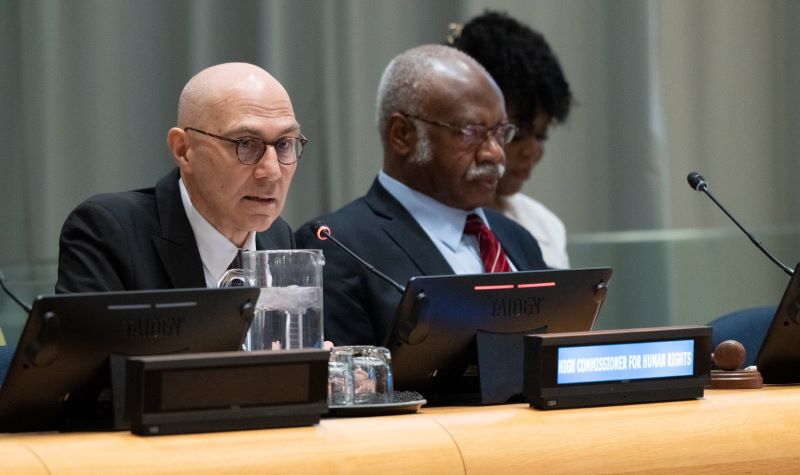
Addressing the UN Human Rights Council in Geneva on Monday during the presentation of his annual report, Türk emphasized the need for restraint, responsible diplomacy, and the revival of cooperative mechanisms vital for regional stability.
“I urge both India and Pakistan to ensure the ceasefire holds, to prevent hateful rhetoric and disinformation, and to re-establish essential water-sharing arrangements,” he told the 47-member body.
His remarks come in the wake of India’s recent suspension of the 1960 Indus Waters Treaty—a World Bank-brokered agreement that has long governed the distribution of water from the Indus River system between the two nuclear-armed neighbors. The treaty, often hailed as a rare example of enduring cooperation, withstood multiple wars and decades of diplomatic strain. However, its suspension marks a concerning turn in bilateral relations, with fears mounting over the broader humanitarian and ecological fallout.
The High Commissioner’s call carries significant weight, as water security remains a critical issue in both nations, particularly in Pakistan, which relies heavily on Indus river waters for agriculture and daily life. The recent military clashes only deepen anxieties over escalating hostilities and the breakdown of longstanding frameworks.
Diplomatic efforts to de-escalate have been tentative. While both Islamabad and New Delhi have publicly expressed a desire to avoid further confrontation, tangible steps toward renewed dialogue remain elusive.
With international concern growing, Türk’s intervention highlights the urgent need for both restraint and renewed diplomacy to avert further regional instability.